The short answer
The King James Version is controversial because of five long-running debates: the Greek text behind its New Testament, the KJV-only claim that it is the only true English Bible, its 400-year-old English, a few disputed renderings such as “Easter” in Acts 12:4, and its royal origins under James I. Most of the arguments are about manuscripts, language and history rather than carelessness; Encyclopaedia Britannica calls it more scholarly than any English Bible before it.
The five debates at a glance
For four centuries the King James Version has been praised and argued over in equal measure. Published in 1611 under King James I, it was generally accepted as the standard English Bible from the mid-17th to the early 20th century, and it is still widely read: a 2014 study reported by Christianity Today found that 55 percent of Americans who read the Bible used the KJV, against 19 percent for the NIV. The disagreements about it fall into five groups.
| Debate | What critics say | What defenders say |
|---|---|---|
| Source texts | Its New Testament follows late manuscripts; older ones found since are closer to the originals | The Received Text is the text God preserved and the churches used for centuries |
| KJV-only | No single translation can claim to be the only true Bible | A Bible built on the preserved text should not be replaced by versions built on a different one |
| Language | Words such as “prevent” and “let” have changed meaning since 1611 | Its wording is exact and reverent, and its “thee” and “thou” keep a distinction modern English has lost |
| Particular renderings | “Easter” in Acts 12:4 and “unicorn” in Numbers 23:22 mislead modern readers | Old words need explaining, but the translation as a whole is accurate |
| Origins | A king shaped the project, partly against the Geneva Bible’s notes | The Puritans asked for it, and strict rules aimed at a scholarly, nonpartisan text |
1. Its source texts: Textus Receptus vs critical text
The deepest disagreement is about the Greek behind the English. The KJV New Testament translates the Textus Receptus, or Received Text: the printed Greek editions that began with Erasmus in 1516. According to the Trinitarian Bible Society, Erasmus worked from six or seven manuscripts, the oldest from the 10th century, and the KJV translators relied mainly on the later editions of Stephanus (1550 and 1551) and Beza (1598).
Most English Bibles today, as the Trinitarian Bible Society itself notes, follow the critical text instead, which rests heavily on older manuscripts such as Codex Vaticanus and Codex Sinaiticus from about the fourth century; the ESV, for example, uses the United Bible Societies and Nestle-Aland Greek editions. Britannica calls the KJV’s Greek base “a poor one,” because the great early codices were not yet known in 1611.
Defenders answer that age is not everything. The Trinitarian Bible Society argues that God has providentially preserved His Word, that the Byzantine text behind the Received Text agrees with more than 95 percent of surviving manuscripts, and that Vaticanus and Sinaiticus disagree with each other more than 3,000 times in the Gospels alone. The difference shows on the page: many modern Bibles bracket or footnote passages such as Mark 16:9–20, which the KJV prints as Scripture. See why Matthew 17:21 is missing and NIV vs KJV.
2. The claim that it is the only true English Bible
A second debate is about what some readers claim for the KJV. The KJV-only view holds that it is the only trustworthy English Bible, and in its strongest form that its English wording is itself perfect; Britannica notes that by the late 20th century some English-speaking fundamentalists regarded it as divinely inspired.
Even among fundamentalists this was a minority view: when it spread in the 1970s, writes Kevin Bauder of Central Baptist Theological Seminary, the great majority did not accept it. The translators themselves made no such claim; their preface, “The Translators to the Reader,” says they set out “to make a good one better, or out of many good ones, one principal good one.” We look at the movement, its arguments and the replies in Is the KJV the only true Bible?
3. Its 400-year-old English
The KJV’s English is the English of 1611, and some of its words have since changed meaning. In 1 Thessalonians 4:15 the living “shall not prevent them which are asleep,” where “prevent” means to go before; the World English Bible says they “will in no way precede those who have fallen asleep.” In 2 Thessalonians 2:7, “only he who now letteth will let, until he be taken out of the way” uses “let” in its old sense of hinder, which the WEB renders “Only there is one who restrains now.”
The KJV’s strongest supporters acknowledge the problem. The Trinitarian Bible Society publishes a list of words in the KJV that are “no longer in everyday use, or now used with a different meaning,” explaining “prevent” as to go before and “let” as to hinder, and its reference Bible gives modern equivalents for such words in the margin.
Defenders also see strengths in the older forms. The Trinitarian Bible Society points out that “thee” and “thou” are singular while “ye” and “you” are plural, a distinction modern English has lost, so in Luke 22:31–32 a reader can see that Jesus prays for Peter alone. See also the timeless KJV.
4. Disputed renderings: “Easter” and the “unicorn”
Critics also point to individual words. Acts 12:4 says Herod put Peter in prison, “intending after Easter to bring him forth to the people,” although the Greek word is pascha, the Passover, and the WEB reads “after the Passover.” Numbers 23:22 says God “hath as it were the strength of an unicorn”; the Hebrew re’em, Britannica explains, means the wild ox, and the WEB reads “the strength of the wild ox.”
Defenders reply that these are questions of older English and older scholarship, not careless work. Britannica notes that many versions of the Bible rendered re’em as “unicorn” or “rhinoceros,” and the Trinitarian Bible Society’s word list explains the KJV’s “unicorn” as a wild bull. On Acts 12:4, a Trinitarian Bible Society article traces “Easter” to William Tyndale, who used it for the Passover season, and concludes that “passover” is to be preferred and that the one remaining “Easter” was probably left in by accident.
Misprints such as the 1631 “Wicked Bible” and the editorial changes made between 1611 and 1769 are a separate story: see King James Bible mistakes.
5. A king’s Bible: its royal and political origins
The KJV began at the Hampton Court Conference of January 1604, which James I held in response to the Puritans’ Millenary Petition for church reform. James rejected most of their demands, defending the bishops with the words “No bishop, no king,” but he accepted their request for a new translation of the Bible. The conference resolved that it should be as close as possible to the original Hebrew and Greek and printed without marginal notes.
That last point was aimed at the Geneva Bible, the favorite of the Puritans. James had found some of its notes “very partial, untrue, seditious” (spelling modernized), objected to one on Exodus 1:19 that in his view allowed disobedience to kings, and called the Geneva translation the worst he had seen. Richard Bancroft, bishop of London and later archbishop of Canterbury, oversaw the work; 54 revisers were approved and 47 scholars, in six companies at Westminster, Oxford and Cambridge, took part.
The translators worked under written rules. The Bishops’ Bible was to be followed and altered as little as the original would allow; “the Old Ecclesiastical Words” were to be kept, so that “church” was not to be translated “congregation”; and no marginal notes were allowed except to explain Hebrew or Greek words. One reading is political: James believed the Puritans and the Geneva Bible were hostile to the monarchy, as a Brigham Young University library exhibit notes. Britannica stresses the other side, describing the rules as meant to curb individual preferences and keep the work scholarly and nonpartisan.
The 1611 edition also contained the Apocrypha: its table of contents lists “The Bookes called Apocrypha” between Malachi and Matthew. Some publishers now leave these books out; the Trinitarian Bible Society, for example, circulates the KJV “to the exclusion of the Apocrypha.”
What the debates mean if you are choosing a Bible
None of these debates settles the question for everyone. The KJV’s strengths are real: a word-for-word method, a text the churches read for centuries, and a marked influence on English style; Britannica calls it more faithful to the original languages and more scholarly than any of its predecessors. Its limits are real too: older vocabulary, a Greek text that, as the Trinitarian Bible Society acknowledges, the great majority of modern scholars do not follow, and a few renderings that even its defenders would change.
If you want the historic text and its language, the KJV remains a reasonable choice, and modern Bibles such as the ESV openly build on what its preface calls the “Tyndale–King James legacy.” If you need easier English, a modern translation may serve you better, or you can read two side by side, which is one reason we print the New Testament in both the KJV and the World English Bible. Compare the options in the most accurate Bible translations, and read the history in King James Bible explained.
From our shelf
New Testaments we print in the KJV and WEB
We print the King James Version (the standard 1769 text), the World English Bible, the Lutherbibel 1912 and the Danish 1871/1907. In the United Kingdom, Jersey, Guernsey and the Isle of Man our books come in the World English Bible. We do not print a complete Bible, and not the NIV, ESV or other modern translations; for those, a bookshop or your church is the place.
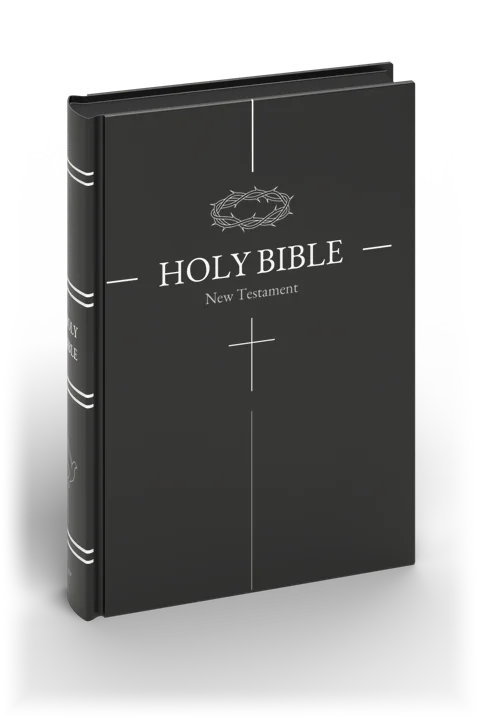
The Black Edition, King James Version
The complete New Testament in the KJV (the standard 1769 text), white text on black pages, the words of Jesus in red. A5, 392 pages.
Softcover $60 · Hardcover $80 · eBook $10 USD
See the KJV Black Edition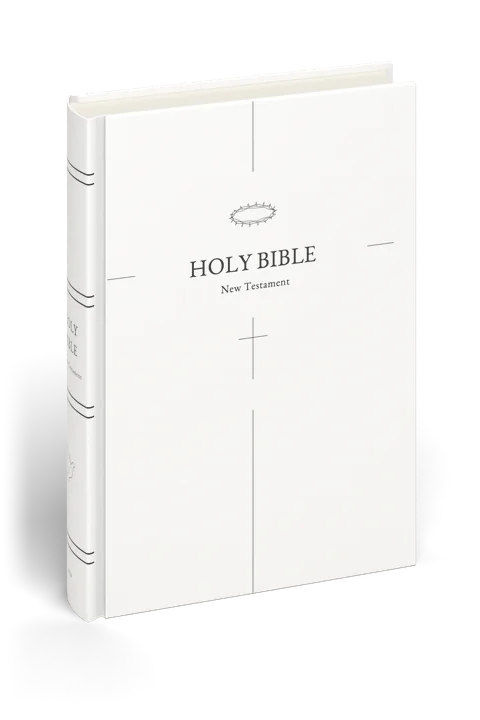
The White Edition New Testament
The same New Testament in classic black type on white pages, the words of Jesus in red. KJV, WEB, German or Danish.
Softcover $60 · Hardcover $80 · eBook $10 USD
See the White Edition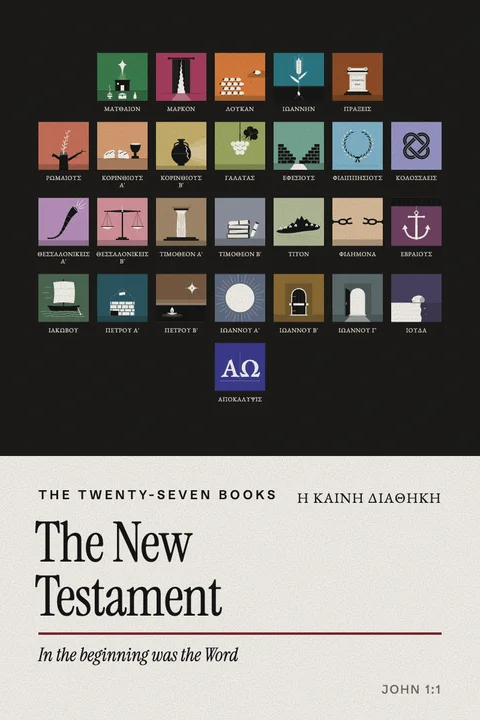
The illustrated New Testament, one volume
All 27 books, each opening with its own cover, 28 full-page illustrations, the words of Jesus in red. King James Version or World English Bible. 6 × 9 in.
Softcover $75 · Hardcover $90 · eBook $10 USD
See the New Testament
Prices in USD, tax included; shipping is calculated at checkout and free over $80. Printed books are printed to order; eBooks are a PDF and an ePub, emailed after payment.
Questions
More questions people ask
Why don’t people like KJV?
Most complaints are about its 400-year-old English, with words such as “prevent” and “let” that have changed meaning, and about its Greek New Testament, the Textus Receptus, which most scholars consider less reliable than the older manuscripts behind modern Bibles. Some people also object to the KJV-only movement rather than to the translation itself.
Why is KJV not the best translation?
Critics say a 1611 translation could not use manuscripts discovered since, and that its vocabulary now gets in the way of understanding. Defenders such as the Trinitarian Bible Society reply that its Received Text and word-for-word method make it the best English translation available. Which is best depends on what you value most.
What is the truth about the King James Bible?
It is an English translation published in 1611 under King James I, made by 47 scholars in six companies who revised earlier English Bibles against the Hebrew and Greek. The text most people read today is a later revision, completed at Oxford by Benjamin Blayney in 1769. It is a careful and influential translation with real limits, and its own translators presented it as an improvement on earlier English Bibles rather than the last word.
Is the KJV the most accurate Bible?
It is a literal, word-for-word translation, and its defenders consider it the most accurate English Bible. Most modern scholars prefer translations based on the critical Greek text and older manuscripts, so the answer depends largely on which manuscripts you consider closest to the originals.
Sources
- britannica.com: Published 1611 under James I; standard English Bible mid-17th to early 20th century; 54 revisers approved, 47 took part in six companies; Bancroft overseer
- britannica.com: Hampton Court Conference, January 1604, after the Millenary Petition; James rejected most Puritan demands (“No bishop, no king”) but accepted a new translation
- britannica.com: Rules to keep the work scholarly and nonpartisan; more faithful than predecessors; poor Greek base, early codices unknown; some fundamentalists: inspired
- britannica.com: Hebrew re’em was translated “unicorn” or “rhinoceros” in many Bible versions; many modern translations prefer “wild ox,” its correct meaning
- clarklibrary.ucla.edu: Hampton Court resolution: a translation as consonant as can be to the Hebrew and Greek, without marginal notes; James called the Geneva Bible the worst
- ccnmtl.columbia.edu: James I found Geneva Bible notes “very partiall, vntrue, seditious” and said its Exodus 1:19 note allowed disobedience to kings; ordered no marginal notes
- christianhistoryinstitute.org: Translators’ rules: follow the Bishops’ Bible; keep old ecclesiastical words (Church not Congregation); marginal notes only to explain Hebrew or Greek words
- exhibits.lib.byu.edu: Project overseen by Richard Bancroft, bishop of London; six companies; marginal notes allowed only when necessary to explain Hebrew or Greek terms
- exhibits.lib.byu.edu: James believed the Puritans and the Geneva Bible were hostile to the monarchy
- tbsbibles.org: Erasmus 1516 used six or seven manuscripts (oldest 10th century); Stephens 1550/1551 and Beza 1598 the KJV’s Greek basis; TBS rejects the Critical Text
- tbsbibles.org: Providential preservation; Byzantine text in 95%+ of manuscripts; Vaticanus and Sinaiticus disagree 3,000+ times; Mark 16:9–20 bracketed; thee/thou singular
- tbsbibles.org: TBS does not claim perfection for the KJV but calls it thoroughly accurate; most modern scholars hold the Critical Text; margin glosses for words like prevent
- tbsbibles.org: Word list of KJV words now used with a different meaning: prevent = go before (1 Th 4:15), let = hinder (2 Th 2:7), Easter = passover, unicorn = wild bull
- tbsbibles.org: “Easter” in Acts 12:4 renders Greek pascha; Tyndale used Easter for the passover season; passover is to be preferred; Easter probably left inadvertently
- tbsbibles.org: The Trinitarian Bible Society circulates the Authorised Version “to the exclusion of the Apocrypha”
- esv.org: ESV New Testament based on the UBS Greek New Testament (5th ed.) and Nestle-Aland (28th ed.); its wording grows out of the Tyndale–King James legacy
- ccel.org: 1611 preface “The Translators to the Reader”: their aim was “to make a good one better, or out of many good ones, one principal good one”
- ccel.org: The 1611 table of books lists “The Bookes called Apocrypha” between Malachi and Matthew
- ccel.org: KJV text revised 1629 and 1638 (Cambridge), 1762 and 1769, the last by Benjamin Blayney at Oxford
- thegospelcoalition.org: The 1769 revision is the most common form of the King James translation read today
- christianitytoday.com: 2014 IUPUI study “The Bible in American Life”: 55 percent of Americans who read the Bible use the KJV, 19 percent the NIV
- centralseminary.edu: Kevin Bauder (2022): the great majority of fundamentalists did not agree with King James Onlyism when it spread in the 1970s