The King James Version uses an older form of English. For readers who know its phrasing from church, family reading or memorized verses, that familiarity can be part of its appeal. For others, the vocabulary takes more time to understand.
Read a passage aloud
Before choosing a translation, read a passage quietly and then aloud. Notice whether you follow the meaning easily and whether the phrasing suits the way you read. A familiar style can help you return to a passage; unfamiliar words may require a dictionary or comparison with another translation.
Older language takes some care
Words such as “thou” and “thee” are visible signs of the KJV’s older English. Other words may look familiar but need closer attention in context. If a verse is unclear, compare the surrounding passage in a contemporary translation rather than relying on one sentence alone.
Which translation do we sell?
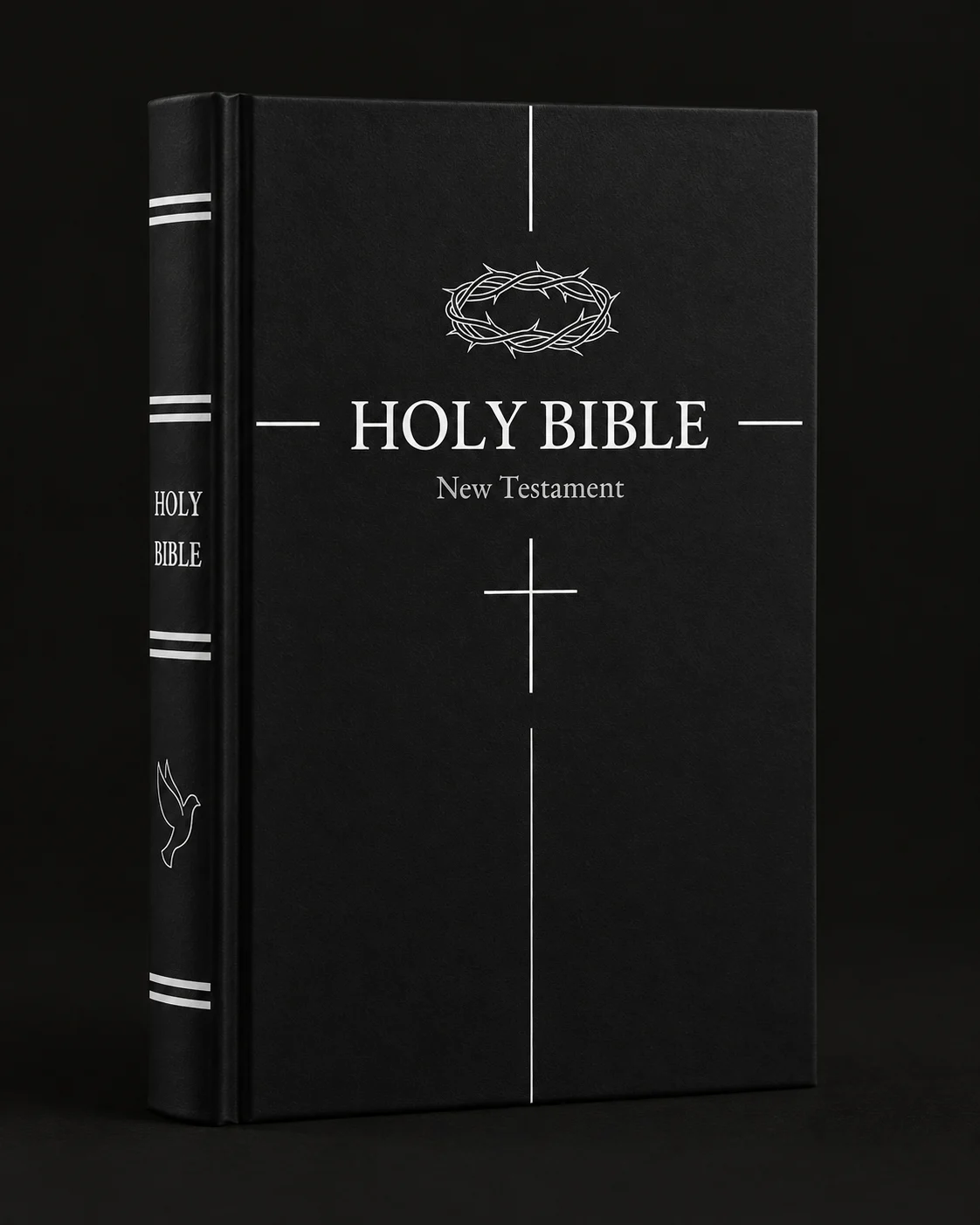
Our digital collection includes a KJV eBook. The physical Black and White editions use the World English Bible (WEB), not the KJV. Both printed editions contain the New Testament only, with all 27 books from Matthew to Revelation.
If you specifically want King James wording, choose the KJV digital edition. If you want a printed book with black pages and white text, inspect the Black Edition’s WEB reading sample before ordering.
Check more than the cover
Translation, contents, text size and format all affect whether a Bible suits you. The product pages identify these details and provide reading previews. Start there, then choose the edition you want to spend time reading.