The short answer
Matthew 17:21, “Howbeit this kind goeth not out but by prayer and fasting,” is absent from some of the oldest Greek manuscripts, including the first hand of Codex Sinaiticus and Codex Vaticanus, so Bibles based on critical Greek texts move it to a footnote. The NET Bible’s notes explain it as a copyist borrowing from Mark 9:29, while defenders of the Received Text hold it is original. Both the King James Version and the World English Bible include it.
Matthew 17:21 in the KJV and the WEB
Both New Testaments we print include the verse. In the King James Version it reads: “Howbeit this kind goeth not out but by prayer and fasting.” In the World English Bible it reads: “But this kind doesn’t go out except by prayer and fasting.”
Open a modern Bible such as the NIV or the ESV, though, and you will find verse 20 followed by a bracketed number or directly by verse 22, with verse 21 in a footnote. The reason lies not in the English but in the Greek manuscripts behind it.
The story around the verse
Matthew 17:14–21 tells of a man who kneels before Jesus and asks him to have mercy on his son, who often falls into the fire and into the water. He has already brought the boy to the disciples, and, in the KJV’s words, “they could not cure him.” Jesus rebukes the demon and the boy is healed.
Afterwards the disciples ask Jesus privately, “Why could not we cast him out?” He answers, “Because of your unbelief,” and speaks of faith as a grain of mustard seed. In the KJV and the WEB, verse 21 then adds the words about prayer and fasting.
Mark tells the same story in Mark 9:14–29. There the disciples ask the same question, and in the KJV Jesus replies: “This kind can come forth by nothing, but by prayer and fasting.” How close the two sayings are is the heart of the textual question.
What the manuscripts show
The NET Bible’s textual note lists the witnesses on each side. Many important manuscripts lack verse 21, among them the original hand of Codex Sinaiticus and Codex Vaticanus, a few other Greek manuscripts and several early translations. The verse is present in a later correction of Sinaiticus, in several other manuscripts the note cites, in the Majority Text (the form found in most Greek manuscripts) and in the Latin tradition.
The two codices matter because of their age. The Codex Sinaiticus Project describes Sinaiticus as written in the middle of the fourth century and as containing the earliest complete copy of the New Testament; its text was annotated by a series of early correctors, which is why scholars distinguish its first hand from later corrections. Codex Vaticanus, held in the Vatican Library, is also dated to the fourth century.
Mark 9:29 has a question of its own. The NET notes that the words “and fasting” are missing there from the first hand of Sinaiticus and from Vaticanus, although most manuscripts, including early ones, have them. The KJV and the WEB both read “prayer and fasting” in Mark 9:29.
Two explanations
The usual explanation among critical scholars is harmonization. The NET Bible’s note, drawing on Bruce Metzger, argues that there is no satisfactory reason a scribe would have dropped the verse if Matthew wrote it, while copyists often inserted material from another Gospel. It concludes that most manuscripts were assimilated to Mark 9:29 and judges the verse “almost certainly not original.”
Others read the evidence the other way. The Trinitarian Bible Society, a London-based society that defends the Authorised Version, holds that the manuscripts behind modern versions are corrupted and that the KJV follows the Traditional or Received Text; its list of omissions marks Matthew 17:21 as one of the more serious. Supporters of the Majority Text point to numbers: the WEB’s editors say the critical text is heavily weighted to a small number of manuscripts and has dropout errors compared with the Majority Text.
The disagreement is less about what the manuscripts say than about how to weigh a few very old witnesses against the many later ones. We do not take sides here. For the wider debate, see why the KJV is controversial and is the KJV the only true Bible?
How modern Bibles print the verse
Modern translations handle verse 21 in different ways, but none simply erases it. In the editions on Bible Gateway:
- NIV: the verse number stands in brackets with no text, and a footnote says some manuscripts add words similar to Mark 9:29.
- ESV: the number is skipped, so verse 20 runs straight into verse 22, and a footnote gives the verse and says some manuscripts insert it.
- NASB 1995: the verse stays in the text inside square brackets, with a note that early manuscripts do not contain it.
- NKJV: the verse stays in the text, with a footnote saying the critical Greek text (NU) omits it.
- NET Bible: the verse is left out of the text and given in a footnote, with the manuscript evidence.
Translators keep the traditional verse numbers, so a verse that is not in their Greek text shows up as a gap or a bracketed number rather than a renumbered chapter.
Other verses the KJV has and most modern Bibles footnote
Matthew 17:21 is one of sixteen whole verses in the KJV New Testament that most modern Bibles move to footnotes. The Trinitarian Bible Society lists each of them as omitted in most modern New Testaments, and the NIV on Bible Gateway gives each one a footnote saying some manuscripts include it. The last column shows whether the World English Bible text we print includes the verse.
| Verse | Subject of the KJV verse | In the WEB we print |
|---|---|---|
| Matthew 17:21 | Prayer and fasting | Yes |
| Matthew 18:11 | The Son of man came to save the lost | Yes |
| Matthew 23:14 | Woe for devouring widows’ houses | Yes, as verse 13 (the two woes in reverse order) |
| Mark 7:16 | Ears to hear | Yes |
| Mark 9:44 | Worm and unquenched fire (as in 9:48) | Yes |
| Mark 9:46 | The same words again | Yes |
| Mark 11:26 | Forgiveness from the Father | Yes |
| Mark 15:28 | Numbered with the transgressors | Yes |
| Luke 17:36 | Two men in the field | No |
| Luke 23:17 | Releasing one prisoner at the feast | Yes |
| John 5:4 | An angel stirring the pool | Yes |
| Acts 8:37 | The eunuch’s confession of faith | No |
| Acts 15:34 | Silas stays on | No |
| Acts 24:7 | Lysias takes Paul away | No |
| Acts 28:29 | The Jews leave, reasoning among themselves | Yes |
| Romans 16:24 | Closing blessing of grace | Yes |
The WEB we print has twelve of the sixteen. It leaves out Luke 17:36, Acts 8:37, Acts 15:34 and Acts 24:7, along with the end of Acts 24:6 and the start of 24:8. In Matthew 23 it has both woes in the opposite order, so the saying about widows’ houses is verse 13. One more difference can look like a gap: the closing words the KJV prints as Romans 16:25–27 appear in the WEB as Romans 14:24–26, as the WEB’s own FAQ explains.
Two longer passages, Mark 16:9–20 and John 7:53–8:11, are a separate case; the Trinitarian Bible Society notes that many modern versions omit them or set them in brackets. Acts 8:37 and 1 John 5:7 are covered in our NIV vs KJV comparison.
Why the WEB differs from both
The World English Bible is an update of the American Standard Version of 1901, and its New Testament was edited to follow the Greek Majority Text, the form of the text found in most Greek manuscripts. The WEB’s FAQ describes the Textus Receptus as the assumed basis of the KJV New Testament, and the Nestle-Aland/United Bible Societies text (NU) as the critical text.
That puts the WEB between the two. Because most manuscripts have Matthew 17:21, the WEB keeps it, agreeing with the KJV against the critical text. Where most manuscripts lack a verse, the WEB follows them: its FAQ names Luke 17:36 and Acts 15:34 as verses not found in the majority of Greek manuscripts, and places them in footnotes. The FAQ says its Greek text is very close to what the KJV translators used, while taking advantage of manuscripts discovered more recently.
More on the translation is in What is the World English Bible?, and the King James Bible explained covers when and how the KJV was made.
From our shelf
New Testaments that keep Matthew 17:21
We print the King James Version (the standard 1769 text), the World English Bible, the Lutherbibel 1912 and the Danish 1871/1907. In the United Kingdom, Jersey, Guernsey and the Isle of Man our books come in the World English Bible. We do not print a complete Bible, and not the NIV, ESV or other modern translations; for those, a bookshop or your church is the place.
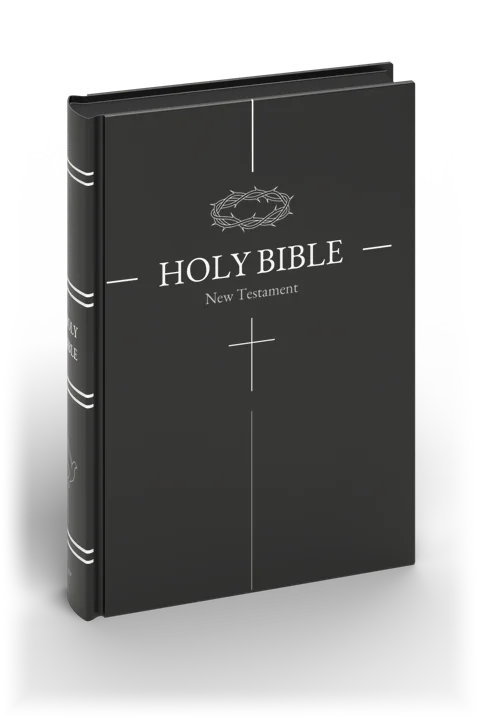
The Black Edition, King James Version
The complete New Testament in the KJV (the standard 1769 text), white text on black pages, the words of Jesus in red. A5, 392 pages.
Softcover $60 · Hardcover $80 · eBook $10 USD
See the KJV Black Edition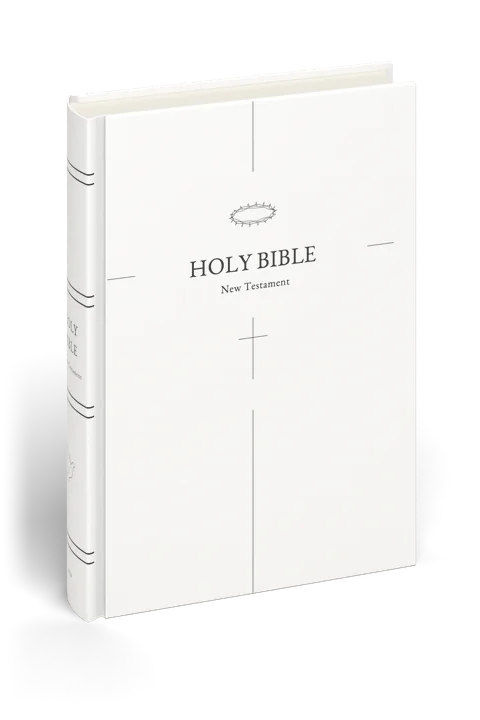
The White Edition New Testament
The same New Testament in classic black type on white pages, the words of Jesus in red. KJV, WEB, German or Danish.
Softcover $60 · Hardcover $80 · eBook $10 USD
See the White Edition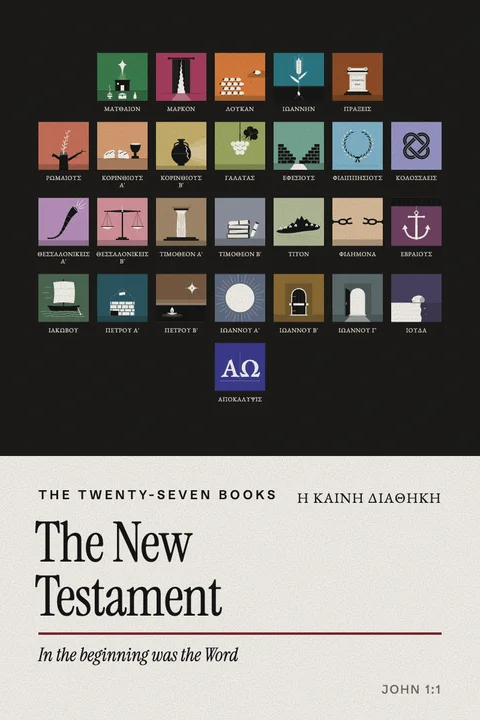
The illustrated New Testament, one volume
All 27 books, each opening with its own cover, 28 full-page illustrations, the words of Jesus in red. King James Version or World English Bible. 6 × 9 in.
Softcover $75 · Hardcover $90 · eBook $10 USD
See the New Testament
Prices in USD, tax included; shipping is calculated at checkout and free over $80. Printed books are printed to order; eBooks are a PDF and an ePub, emailed after payment.
Questions
More questions people ask
What Bible verse is in KJV but not NIV?
Sixteen whole verses of the KJV New Testament appear in the NIV only as footnotes: Matthew 17:21, 18:11 and 23:14; Mark 7:16, 9:44, 9:46, 11:26 and 15:28; Luke 17:36 and 23:17; John 5:4; Acts 8:37, 15:34, 24:7 and 28:29; and Romans 16:24. In each place the NIV has a footnote saying some manuscripts include the verse.
Did the NIV remove verses from the Bible?
Not in the sense of hiding them. Where the Greek text the NIV follows lacks a verse, the NIV leaves it out of the main text and adds a footnote at that point saying some manuscripts include it. Whether copyists added these verses or dropped them is the real debate, and scholars and Bible societies answer it differently.
What does Matthew 17:21 mean?
It ends Jesus’ answer to his disciples after they failed to heal a boy. Having said “Because of your unbelief,” he adds in the KJV: “Howbeit this kind goeth not out but by prayer and fasting.” Mark 9:29 records a similar saying in the same story.
Does the World English Bible include Matthew 17:21?
Yes. The WEB reads: “But this kind doesn’t go out except by prayer and fasting.” Its New Testament follows the Greek Majority Text, and the verse is found in most Greek manuscripts.
Sources
- biblia.com: NET note: many important witnesses (א* B …) lack 17:21; in א2 C D L W, Majority text, Latin; Metzger: assimilated to Mark 9:29; NET puts it in a footnote
- biblia.com: NET note on Mark 9:29: ‘and fasting’ lacking in א* and B; present in most witnesses, including early ones
- codexsinaiticus.org: Codex Sinaiticus: written in the middle of the fourth century; earliest complete New Testament; heavily annotated by early correctors
- csntm.org: Codex Vaticanus (GA 03): fourth century, Vatican Library, Vat. gr. 1209
- tbsbibles.org: TBS list of omissions in most modern NTs: all 16 verses; 17:21 marked serious; modern versions follow corrupted manuscripts; AV follows Received Text
- ebible.org: WEB NT follows the Majority Text; TR basis of KJV; NU critical text; Luke 17:36, Acts 15:34 in footnotes; Romans 14:24–26 = 16:25–27
- worldenglish.bible: WEB is based on the American Standard Version of 1901; its New Testament combines ASV text choices with the Greek Majority Text
- biblegateway.com: How the NIV, ESV, NASB 1995 and NKJV print Matthew 17:21 (bracketed number, skipped number, square brackets, footnote)
- biblegateway.com: NIV gives Matthew 18:11, Mark 7:16, Luke 17:36, John 5:4 and Romans 16:24 as footnotes
- biblegateway.com: NIV gives Matthew 23:14, Mark 9:44, 9:46, 11:26, 15:28, Luke 23:17, Acts 15:34, 24:7 and 28:29 as bracketed numbers with footnotes
- biblegateway.com: NIV gives Acts 8:37 as a bracketed number with a footnote