
The short answer
There is no single best Bible translation; the best one is the one that fits how you will use it. For close study, word-for-word translations such as the NASB, LSB, ESV, NKJV and KJV stay nearest to the original wording, while balanced or thought-for-thought versions such as the CSB, NIV and NLT are easier for everyday reading. Many readers keep one of each.
Four ways to translate the Bible
Every English Bible sits somewhere on a line between two goals. At one end, a translation tries to mirror the words and grammar of the Hebrew, Aramaic and Greek as closely as English allows. This is called formal equivalence, or word-for-word translation. At the other end, it tries to say what each sentence means in natural modern English. This is functional or dynamic equivalence, often called thought-for-thought. Beyond that lies paraphrase, which retells the text freely in today's idiom.
No translation is purely one or the other. Word-for-word versions still rearrange word order so the English makes sense, and thought-for-thought versions still work from the original languages. The useful question is how far each one leans, and the publisher usually says so in the preface. The table below uses each publisher's own description where one exists.
| Approach | What it aims for | Examples (publisher's own term where available) |
|---|---|---|
| Word-for-word (formal equivalence) | Keeps close to the words and sentence structure of the original languages | KJV (1611); NKJV (1982, "complete equivalence"); NASB ("formal equivalence"); LSB (2021); ESV (2001, "essentially literal") |
| Balanced (mediating) | Weighs closeness to the original against natural English | CSB (2017, "optimal equivalence"); NIV (balances transparency to the original with clarity) |
| Thought-for-thought (dynamic or functional equivalence) | Carries the meaning of each sentence into everyday English | NLT (1996, "dynamic equivalence"); NIrV and ICB for children |
| Paraphrase or near-paraphrase | Restates the text freely in contemporary language | The Message (its publisher places it between paraphrase and dynamic equivalence); The Living Bible |
Best for close, word-for-word study
If you want to see the structure of the original, trace a repeated word through a book, or follow a commentary that discusses the Greek, choose a formal translation. The New American Standard Bible from the Lockman Foundation (complete in 1971, updated in 1995 and 2020) describes itself as following a formal equivalence philosophy. The Legacy Standard Bible (2021) is a direct update of the NASB 1995 that translates key words as consistently as possible, prints God's covenant name as Yahweh and renders the Greek word doulos as slave.
The English Standard Version, published by Crossway in 2001, calls itself essentially literal: as close to the original wording as clear English allows. The New King James Version (1982) keeps the King James tradition and its Greek text while updating the English. The King James Version itself (1611) remains a word-for-word translation, although its four-hundred-year-old English adds a second layer of work for modern readers.
The trade-off is readability. The more closely a version follows Hebrew and Greek sentence structure, the stiffer it can feel, so it often helps to pair a formal translation with a more readable one.
Best for everyday reading
For reading whole books, devotional time or a yearly reading plan, a balanced or thought-for-thought translation keeps you moving. The Christian Standard Bible (2017) calls its method optimal equivalence and places itself between form-focused and meaning-focused translations. The New International Version (1978, last updated in 2011) says it balances transparency to the original with clarity of meaning, and its publisher puts it at an eighth-grade reading level. The New Living Translation (1996), which began as a revision of The Living Bible but was made as a fresh translation from Hebrew and Greek, is classified by its publisher, Tyndale, as dynamic equivalence.
Bible Gateway's translation guide rates the NLT at about a sixth-grade reading level, the NIV and CSB at about seventh grade, the ESV at tenth and the KJV at twelfth. Grade levels depend on the formula used, so treat them as rough guides rather than exact scores.
Best for reading aloud and church use
The King James Version was made to be heard: its 1611 title page says it was appointed to be read in churches. Crossway lists public reading and preaching among the intended uses of the ESV, and the NRSV Updated Edition, commissioned by the National Council of Churches and released in 2021, is designed for worship as well as study and scholarship across many traditions.
Some churches settle the question for you. In the United States, the Catholic Lectionary used at Mass is based on the New American Bible and is the only English lectionary permitted there. If you read Scripture aloud in a congregation, the most helpful choice is usually the translation your church already uses, so listeners can follow along.
Best for new readers
If you are new to the Bible, start with a translation you can understand without a dictionary, such as the NLT, NIV or CSB, and begin with one of the Gospels, such as Mark or John. The Message, completed in 2002, can be a lively companion, but its own publisher says Eugene Peterson never considered it a study Bible and presents it as a second Bible to read alongside a standard translation.
If you like traditional wording but want a modern text you are free to copy and share, the World English Bible is a public-domain revision of the 1901 American Standard Version in present-day English. Because it carries no copyright, it can be printed and quoted without permission.
Best for children
Young readers do best with a translation written for them. The New International Reader's Version adapts the NIV to a third-grade reading level with shorter sentences and simpler words; the first full NIrV Bible appeared in 1996. The International Children's Bible is also presented by its publisher's parent company as written at a third-grade level and translated from the Hebrew and Greek. As children grow, many move on to the NIV, NLT or CSB, and later to a word-for-word translation for study.
How to choose in four steps
A simple test works better than any ranking. For many readers, owning two translations, one formal and one readable, is a sensible answer.
- Name your main use: study, daily reading, reading aloud, or a child's first Bible.
- Read one familiar passage, such as Psalm 23 or John 1, in three translations side by side on a free comparison site.
- Open the preface: it tells you which Hebrew and Greek texts were used and how literal the translators set out to be.
- Check what your church or study group uses, so you can follow along together.
From our shelf
The translations we print
We print four public-domain texts: the King James Version, the World English Bible, the Lutherbibel 1912 and the Danish 1871/1907. We do not print a complete Bible, and not the NIV, ESV or other modern translations; for those, a bookshop or your church is the place.
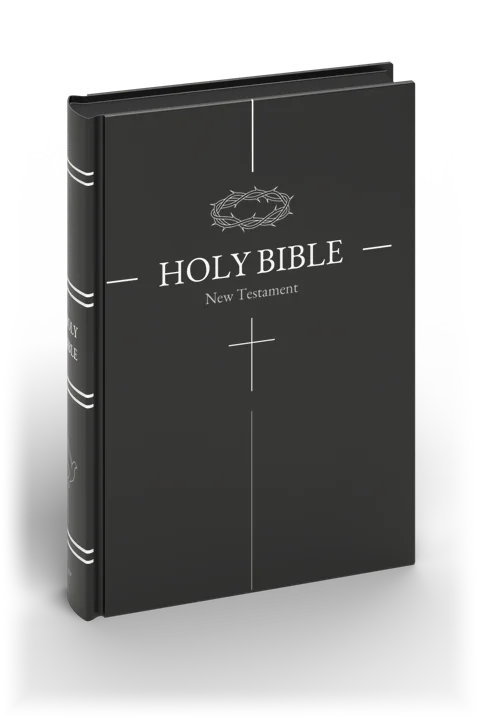
The Black Edition, King James Version
The complete New Testament in the KJV (the standard 1769 text), white text on black pages, the words of Jesus in red. A5, 392 pages.
Softcover $60 · Hardcover $80 · eBook $10 USD
See the KJV Black Edition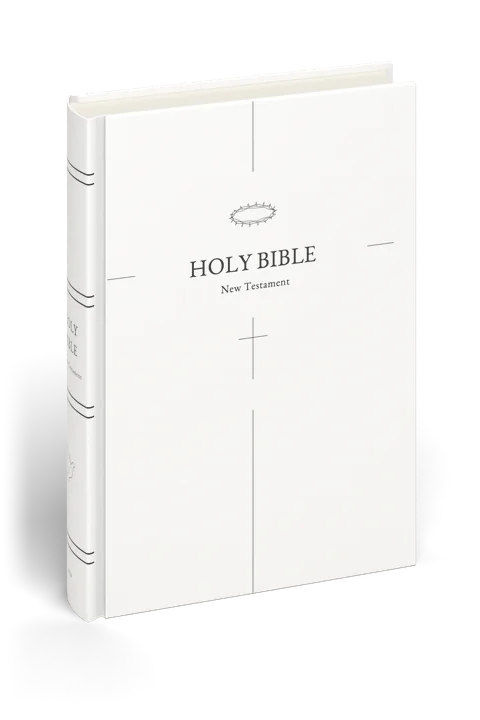
The White Edition New Testament
The same New Testament in classic black type on white pages, the words of Jesus in red. KJV, WEB, German or Danish.
Softcover $60 · Hardcover $80 · eBook $10 USD
See the White Edition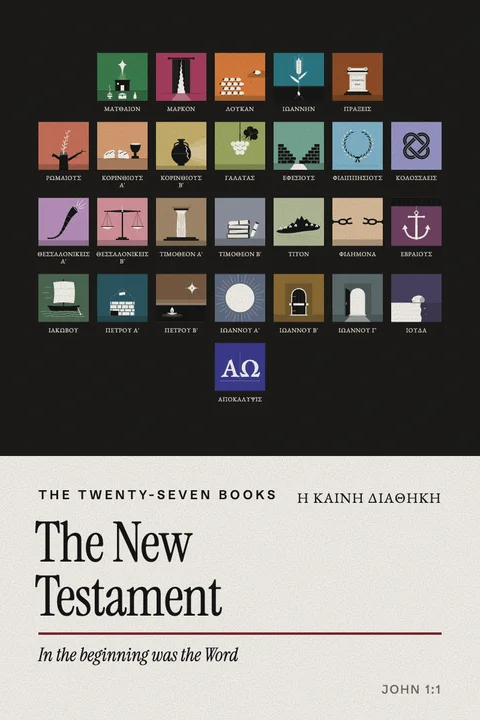
The illustrated New Testament, one volume
All 27 books, each opening with its own cover, 28 full-page illustrations, the words of Jesus in red. King James Version or World English Bible. 6 × 9 in.
Softcover $75 · Hardcover $90 · eBook $10 USD
See the New Testament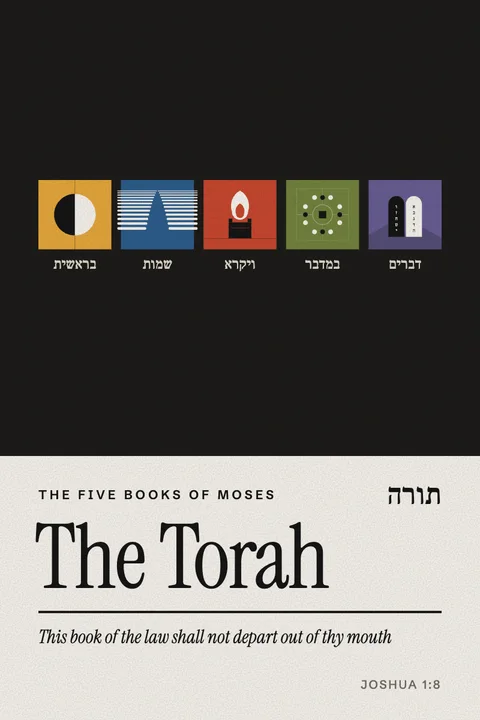
The Torah: the Five Books of Moses
Genesis to Deuteronomy, complete, in one volume with 31 full-page illustrations, or as five books. King James Version or World English Bible.
Softcover $60 · Hardcover $90 · eBook $10 USD
See the Torah
Prices in USD, tax included; shipping is calculated at checkout and free over $80. Printed books are printed to order; eBooks are a PDF and an ePub, emailed after payment.
Questions
More questions people ask
Is there one Bible translation all scholars agree is best?
No. Translators weigh closeness to the original wording against clarity in different ways, and some follow different Greek manuscript traditions. That is why several respected translations exist side by side.
Should I use more than one Bible translation?
Often, yes. Comparing a word-for-word translation with a thought-for-thought one shows where a verse is hard to translate and where the translators had to make a choice.
Which Bible translation is easiest to read?
For adults, Bible Gateway's guide rates the NLT and The Message at about a sixth-grade reading level. For children, the NIrV and the International Children's Bible are written at about a third-grade level.
What is the World English Bible?
A modern-English, public-domain revision of the 1901 American Standard Version. Its New Testament follows the Greek Majority Text, and its classic edition prints God's name as Yahweh.
Sources
- lockman.org: NASB follows a formal equivalence translation philosophy; project began 1959, complete Bible 1971, updates 1977, 1995 and 2020
- lockman.org: LSB is a direct update of the NASB 1995 and translates words as consistently as possible
- lsbible.org: LSB renders the divine name as Yahweh and doulos as slave
- en.wikipedia.org: LSB New Testament February 2021, complete Bible November 2021, Three Sixteen Publishing with the Lockman Foundation
- esv.org: ESV describes itself as essentially literal; intended for study, public reading and preaching, memorization; copyright from 2001
- bible-researcher.com: NKJV principle of complete equivalence; NT 1979, full Bible 1982; continuation of the KJV tradition
- en.wikipedia.org: KJV published 1611, word-for-word translation; 1769 Oxford standard text
- csbible.com: CSB philosophy of optimal equivalence in a mediating position
- bhpublishinggroup.com: CSB first products released March 2017 as revision of the HCSB
- thenivbible.com: NIV balances transparency to the original with clarity of meaning
- thenivbible.com: NIV publisher states an 8th-grade reading level
- sites.tyndale.com: NLT generally classified as dynamic equivalence; began as a revision of The Living Bible; first edition 1996; translated from Hebrew and Greek
- biblegateway.com: Reading levels: NLT 6, NIV 7, CSB 7, ESV 10, KJV 12, The Message 6
- en.wikisource.org: 1611 title page: appointed to be read in churches
- friendshippress.org: NRSVue commissioned by the National Council of Churches, revision directed by the Society of Biblical Literature, for worship, study, classrooms and scholarship
- biblegateway.com: NRSVue updates submitted to the NCC in 2021 for final approval; text copyright 2021 National Council of Churches
- usccb.org: US Lectionary for Mass is based on the New American Bible and is the only English lectionary permitted at Mass in US dioceses
- messagebible.com: The Message: publisher places it between paraphrase and dynamic equivalence; Peterson never considered it a study Bible; a 'second Bible'; full Bible 2002
- worldenglish.bible: World English Bible: public domain, revision of the 1901 ASV, Majority Text NT, classic edition uses Yahweh
- thenivbible.com: NIrV written at a third-grade reading level; first full NIrV Bible 1996
- faithgateway.com: ICB requires about a third-grade reading level; translated from Hebrew and Greek (HarperCollins Christian Publishing site)