The short answer
Choose a complete Bible in a modern translation you can read easily. For most people that is the NIV, the NLT or the CSB, or whichever translation your church reads aloud on Sunday. Do not start at page one: begin with a Gospel, usually John or Mark. If you would like a book of your own for the Gospels and the rest of the New Testament first, a red-letter New Testament is a good, lighter way to start. That is what we make, but you will still want the whole Bible as you grow.
Becoming a Christian and then walking into a bookshop can be bewildering. There are dozens of translations, hundreds of editions, study Bibles, journaling Bibles, Bibles for men, women and teenagers, and apps that hold all of them. The good news is that you do not need to find the perfect Bible before you begin. You need one you will actually open and read.
This guide is written by a small shop that prints Bible books, so we will be clear about our interest. We recommend several translations we do not sell, we say plainly what our books are and are not, and you can follow every piece of advice here without buying anything from us.
Decision 1: a translation you can read
The Bible was written mainly in Hebrew and Greek, so every English Bible is a translation. Translators make a choice. Some stay as close as they can to the wording and word order of the original (“word for word”). Others put each sentence into the most natural English (“thought for thought”). Many sit in between. None of the widely used translations below is a bad choice. They differ in how they read.
| Translation | Approach | How it reads |
|---|---|---|
| NLT New Living Translation | Thought for thought | The easiest of the main translations: everyday English, short sentences. |
| NIV New International Version | Between the two | Clear modern English. One of the most widely read translations, used by many churches and courses. |
| CSB Christian Standard Bible | Between the two | Modern and readable, a little closer to the original wording than the NIV. |
| ESV English Standard Version | Word for word | More formal and precise. Popular for study; some sentences take more effort. |
| KJV King James Version | Word for word | The classic of 1611: majestic, memorable, with “thee” and “thou” and older words. |
| WEB World English Bible | Close to word for word | Modern English, free of copyright. Uses the name “Yahweh” where most Bibles print “the LORD”. |
Two rules settle most cases. If you go to a church, start with the translation it reads. You will follow the sermon more easily and can ask about the same wording afterwards. If you do not, pick the most readable one you are comfortable with. A translation that feels effortless is the one you will keep reading. Our guide Bible translations explained for beginners compares all of these in more detail, with the same verses side by side where the text is free to quote.
If you are joining the Catholic or Orthodox Church, ask your parish which Bible it uses. Catholic Bibles contain 73 books, not 66, because they include the deuterocanonical books such as Tobit and the books of Maccabees; Orthodox Bibles include these and a few more. Translations such as the NABRE or the RSV Catholic Edition are made for that canon.
Decision 2: what is inside the book
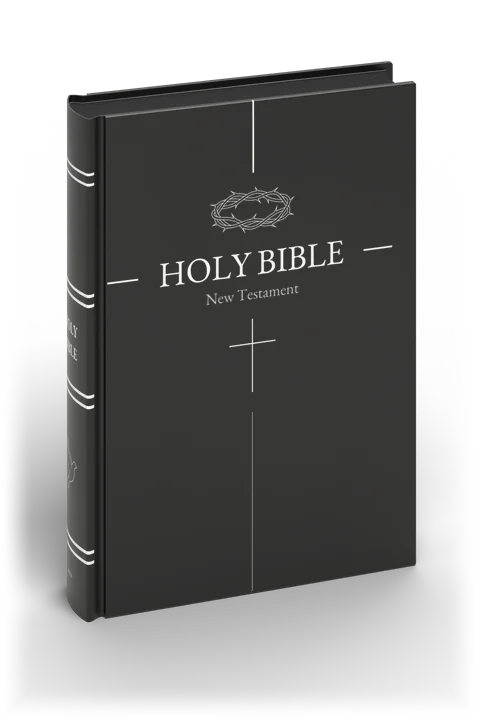
A complete Protestant Bible has 66 books: 39 in the Old Testament, from Genesis to Malachi, and 27 in the New Testament, from Matthew to Revelation. Many smaller books on sale are only part of it. A New Testament contains the 27 New Testament books: the four Gospels about the life of Jesus, Acts, the letters and Revelation. Some editions add Psalms and Proverbs. Check the contents before you buy, especially for a gift, because “Holy Bible” on a cover does not tell you which books are inside.
Starting with the New Testament is a common and sensible choice for a new believer, and we explain why in Is it OK to start with just the New Testament? But the New Testament keeps pointing back to the Old: Jesus quoted it, explained it and said it spoke of him. Over the coming months you will want the whole Bible.
To be clear about our own books: we do not currently sell a complete Bible, either in print or as an eBook. We print the New Testament, the first five books of the Old Testament and books of Scripture on single themes. For a complete Bible, ask your church (many give one to new members), visit a Christian bookshop, or read the World English Bible and the King James Version free at ebible.org. A Bible app gives you a complete Bible in many translations on your phone at no cost.
Decision 3: reading Bible, study Bible or app
A study Bible prints notes, introductions and cross-references around the text. It can answer questions as you go, but it is heavy, the notes reflect the views of their editors, and new readers can end up reading the notes instead of the Bible. A reading Bible prints the text with little else, so the story flows. For the first months, many people do best with a reading Bible plus a person they can ask; a study Bible can come later. We compare the two in Reading Bible vs Study Bible.
An app is free, complete and always with you. A printed book has no notifications, lets you see where you are in the whole, and is easy to underline and return to. Plenty of Christians use both: a book for unhurried reading at home, an app on the bus.
A simple way to decide
Three questions, in order. Most new believers have their answer by the second.
1Does your church read a particular translation?
- YesUse that one. Ask whether the church gives Bibles to new members.
- No, or not sureGo to question 2.
2How do you like to read?
- As easily as possibleNLT (or NIV). Good if English is not your first language.
- Clear, a little closer to the originalNIV or CSB.
- Precise, and I don’t mind effortESV, or NKJV for King James wording in modern English.
- I love older EnglishKJV.
- Modern, and free to shareWEB, in the public domain.
3What do you want to hold first?
- The whole BibleA complete reading Bible in that translation: from your church, a bookshop, or free online.
- Just the Gospels to beginA New Testament, or a single Gospel such as John, alongside a full Bible or an app.
You don’t have to do this alone
Choosing a Bible is the easy part; reading it is where faith grows, and it was never meant to be a solitary project. Pray before you read, even a sentence. Find a church where the Bible is read and explained, and if it runs a group or course for new Christians, join it. Tell one Christian friend what you are reading and ask them what they are reading. A modest Bible read with others will do more for you than a perfect one read alone.
What to read first
Do not try to read from Genesis straight through to Revelation in your first weeks. Many people who try stall somewhere in the laws of Leviticus. Start with the life of Jesus. John is the Gospel most often recommended to new believers, because it was written for exactly that reader:
but these are written that you may believe that Jesus is the Christ, the Son of God, and that believing you may have life in his name.
KJVBut these are written, that ye might believe that Jesus is the Christ, the Son of God; and that believing ye might have life through his name.
John 20:31 · World English Bible, with the King James Version
Mark is the other good starting point: the shortest Gospel, sixteen fast-moving chapters, readable in a few evenings. After a Gospel, read Acts, which tells what happened next, then a short letter such as Philippians or 1 John. Our guide to starting to read the Bible gives a simple method and a 30-day plan that begins with John.
Where our books fit, honestly
We make printed books of Scripture, and some of them suit a new believer well. Here is who each one is for, and who should choose something else.
- A New Testament to start with the Gospels. The Black Edition (white text on black pages) and the White Edition (black text on white) are the complete New Testament in the World English Bible, with the words of Jesus printed in red so you can see at a glance where he speaks. When we set the Gospels for print we counted how much of them is his own speech: in the King James text of John, 419 of the 879 verses contain his words, almost half, so the red really does change how a first reading feels. A5, 432 pages, softcover $60 or hardcover $80. Choose one of these if you want a distinctive, carefully made book for your first year of reading the New Testament. Choose something else if you need a full Bible, or if your church reads from the NIV and you want the same words.
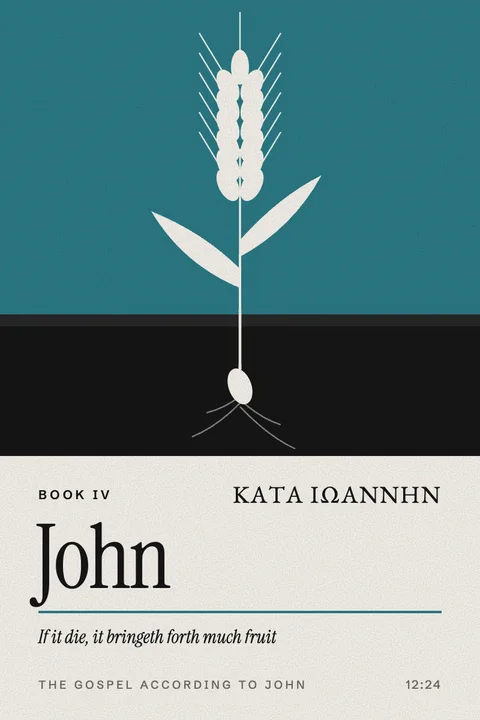
- One Gospel, on its own. Our illustrated New Testament prints each Gospel as its own slim book, with full-page illustrations and the words of Jesus in red, in the King James Version or the World English Bible. John is 64 pages: $35 as a softcover, $45 as a hardcover or $10 as an eBook. A small book you can finish gives a real sense of having read a whole book of the Bible.
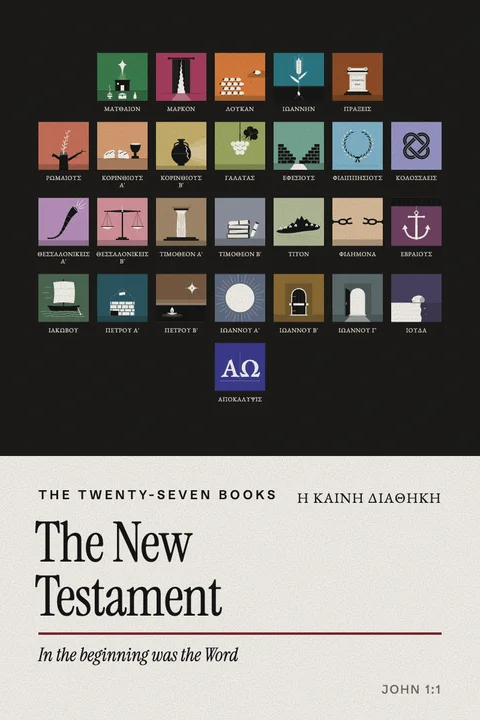
- The whole New Testament, illustrated. The same series in one volume, all 27 books, each opening with its own cover: $75 softcover, $90 hardcover, $10 eBook.
- Later, the Old Testament’s beginning. When you are ready for Genesis, the Five Books of Moses print Genesis to Deuteronomy in full. Our theme books of Scripture, such as Hope, Faith and Prayer, gather the passages on one subject. They are good companions, not a replacement for reading whole books.
Whatever you choose, look inside before you buy. Each of our product pages shows the actual printed pages and a reading sample, so you can check the wording and the size of the type.
Questions new Christians ask
What is the best Bible for a new Christian?
A complete Bible in a translation you can read easily, usually the NIV, the NLT or the CSB, or the translation your church reads. The best Bible is the one you will open every day. Start reading with the Gospel of John or Mark rather than at Genesis.
Should a new Christian read the King James Version?
You can, especially if your church reads it or you love its language. Its older English (“thee”, “thou”, “saith”) takes some getting used to, so many new readers start with a modern translation and come to the KJV later. The NKJV keeps much of its wording in modern English.
Do I need a study Bible as a beginner?
No. A plain reading Bible lets the text flow, and a person you can ask is often more help than printed notes. A study Bible can be a good second Bible once you know which questions you have.
Is a New Testament enough to start with?
Yes, as a start. Many pastors suggest beginning with the Gospels. But the New Testament quotes and builds on the Old, so plan to read the whole Bible in time.
Is a Bible app as good as a printed Bible?
An app is free, complete and always with you. A printed Bible has no distractions and makes it easier to see where you are and to come back to passages you marked. Many Christians use both.
Does Premium Black Bible sell a complete Bible?
Not at the moment. We sell the New Testament (the Black and White Editions and an illustrated series), the Five Books of Moses and theme books of Scripture. For a complete Bible, ask your church, visit a bookshop, or read the WEB or KJV free at ebible.org.
How we wrote this guide. We are a small Bible publisher and shop in Aarhus, Denmark. We print the World English Bible and the King James Version, and the quotations here come from the texts in our books. The descriptions of the other translations follow their publishers’ own accounts, listed below. We recommend translations we do not sell, and we tell you where our books do not fit. Published 21 October 2026.
Sources and further reading
- About the NIV (the NIV’s translators and publisher)
- The ESV translation (Crossway)
- About the CSB (Holman Bible Publishers)
- World English Bible FAQ (ebible.org)
- How the four Gospels differ and which Gospel to read first