Choose a reading-focused edition if you want to follow the biblical text and keep your questions in a separate notebook. Choose a study Bible if you want explanations alongside the passage. Neither label tells you the translation, font size or books included: check those separately before you buy.
Reading Bible vs Study Bible: Which Will You Use?
Choose between a page focused on Scripture and an edition with commentary. Compare the actual pages before buying.
Go straight to the guide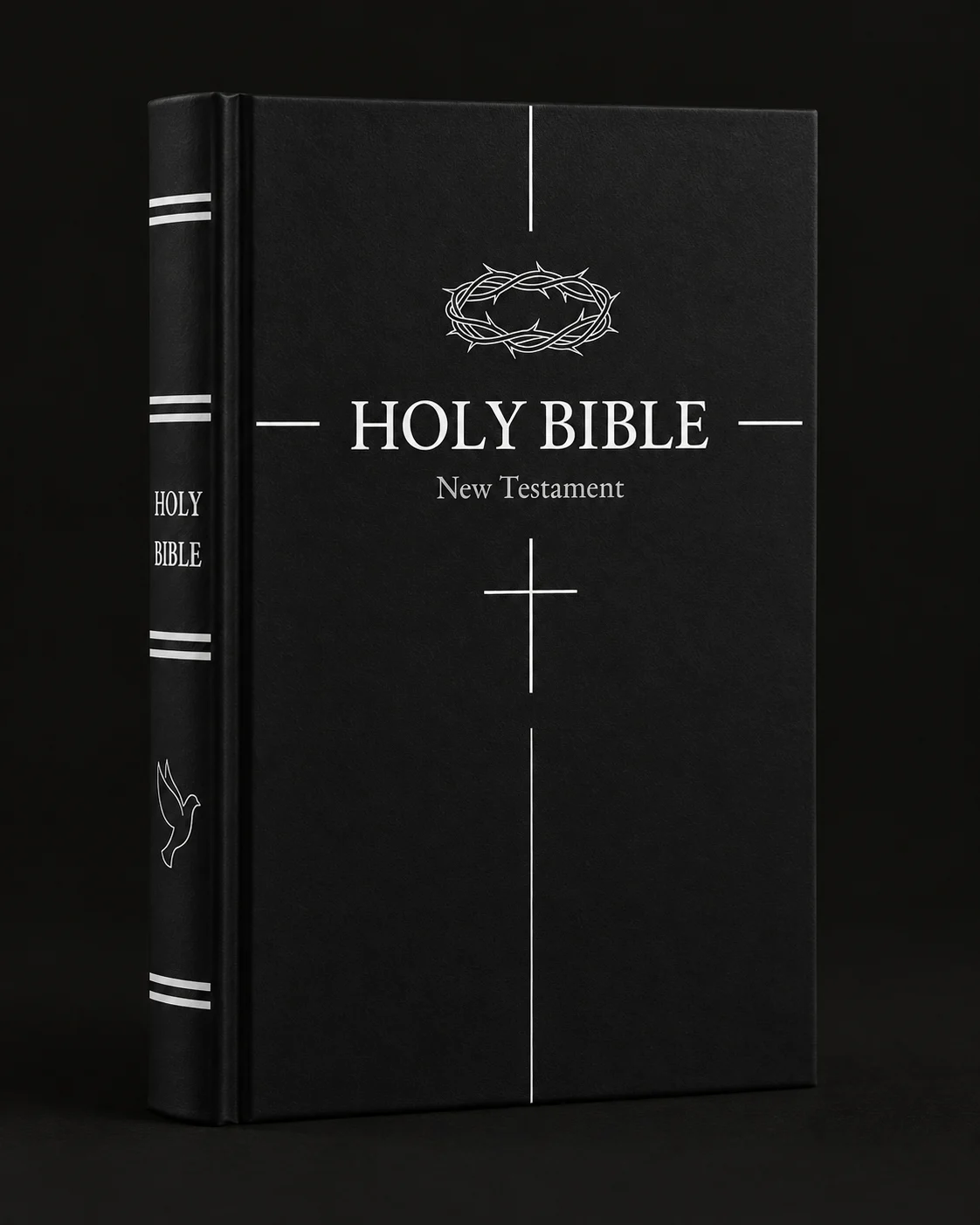
THE PRINTED NEW TESTAMENT
The Black Edition
White text on black pages. Jesus’ words in red.
All 27 New Testament books · English WEB.
Softcover $79 · Hardcover $99 USD · shipping separately
Buy the Black Edition Read a sample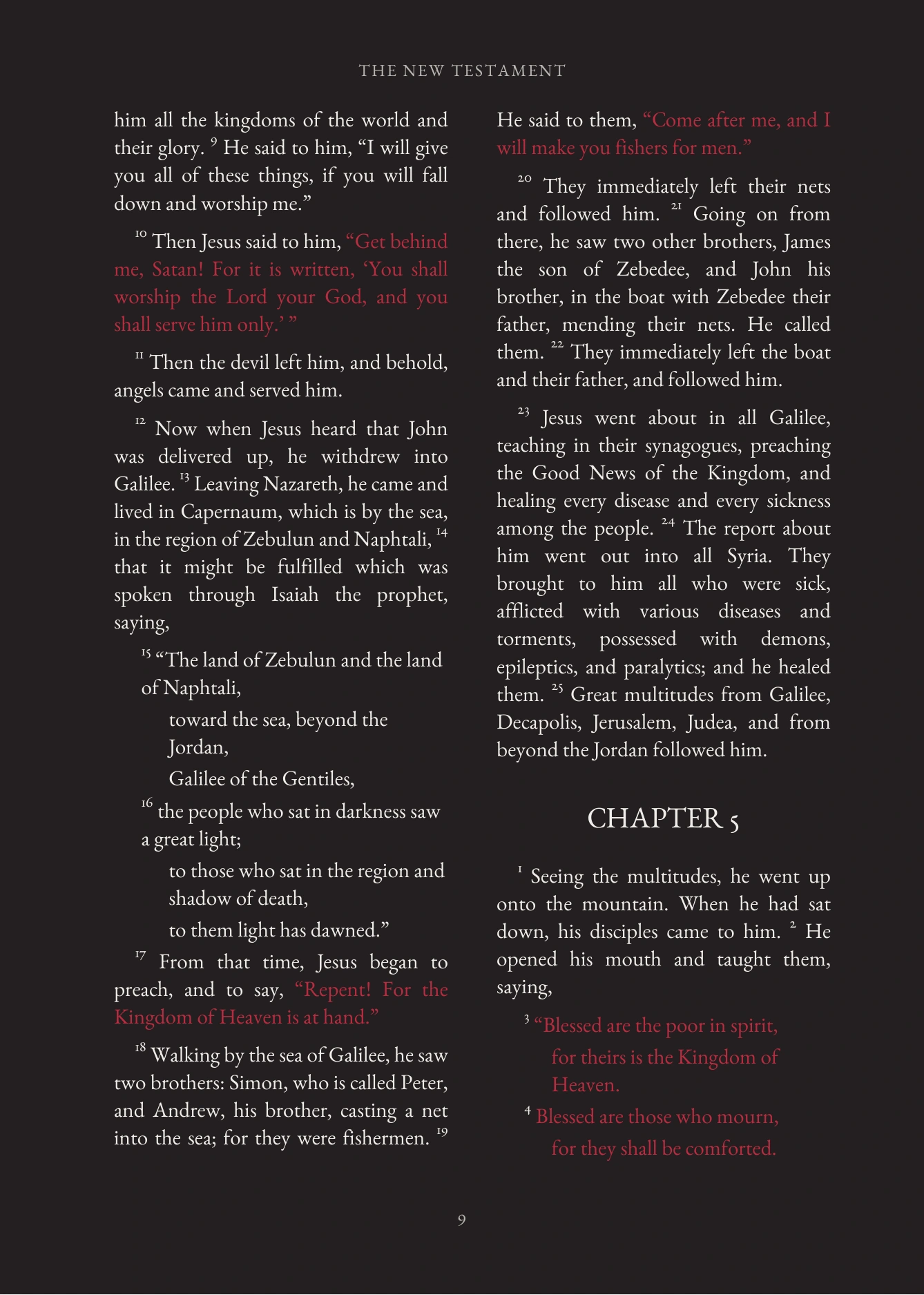
Start with what happens when you open the book
Imagine reading a chapter of Mark. Do you want to finish the scene before looking up a place, a phrase or a reference? A page focused on Scripture may suit that habit. Would you rather consult an explanation as soon as a question appears? Look at a study edition’s notes as carefully as its main text.
This is a choice about how you want to use the book, not a ranking of serious and casual readers. You can study from a plain text and read continuously from a study Bible. The useful question is which page helps you do the task you actually intend to do.
What study notes add—and what they are
Study editions may include commentary, book introductions, maps and other reference material. Check the specific edition’s contents instead of assuming every study Bible has the same tools. Crossway’s explanation of its Global Study Bible explicitly distinguishes the biblical text from the editors’ study notes. The notes are an explanation of Scripture, not an extra part of the passage.
Before choosing, find out who wrote the notes and read an example. Does the explanation answer your question? Can you tell where the translation ends and commentary begins? If you already use a church or reading-group resource, check whether you need another set of notes in the same book.
Compare one passage, not two cover photographs
Open the same chapter in both samples. Read a whole paragraph at a comfortable size. Notice whether your eye moves easily to the next line, whether you can distinguish footnotes from verses, and how often you leave the main text to look elsewhere on the page.
Then use the book as you expect to use it. Look up a verse. Find the start of the next chapter. Try reading with the sample displayed at the book’s actual page size. A small phone image can make an attractive layout look more readable than it will be in print; enlarging it can hide the opposite problem.
Translation, contents and layout are separate choices
A study Bible is not itself a translation. Read the translation name on the edition you are considering. Also check whether it contains both Testaments or only the New Testament. Someone following a plan that includes Genesis or Psalms needs those books available elsewhere if they choose a New Testament-only edition.
Check the type size, dimensions and sample even when the title sounds familiar. Do not infer large print, wide margins or space for handwritten notes from a cover image. If any of those features is essential, choose an edition that explicitly provides it.
Where our printed editions fit
Our Black and White Editions contain the 27 books of the English World English Bible New Testament. They are not commentary study Bibles, and the Old Testament is not included. Choose them for the text and presentation shown in their samples, rather than expecting a built-in study course.
The Black Edition has white text on black pages; the White Edition uses black text on white pages. Both show Jesus’ words in red. Physical softcover is $79 and hardcover is $99 USD, with shipping charged separately. Open the actual-page sample before deciding whether either edition suits your reading.
A simple buying decision
Write down three requirements before comparing prices: the books you need, the translation you want, and whether you want commentary on the page. Once those are settled, use the sample to decide on readability and choose the binding. If the edition fails one of your requirements, a beautiful cover does not fix the mismatch.
Prefer a printed copy? Read the sample before choosing.
Explore the Black Edition