If you have finished one Gospel, choose another and read it on its own terms. You do not need to combine all four into a single timeline. Comparing their openings gives you a concrete starting point: Matthew begins with a genealogy, Mark introduces John the Baptist and Jesus’ public activity, Luke opens with a preface, and John begins with the Word.
Matthew, Mark, Luke or John: Which Gospel Should You Read Next?
Compare the openings of the four Gospels and choose a different reading experience after finishing one.
Go straight to the guide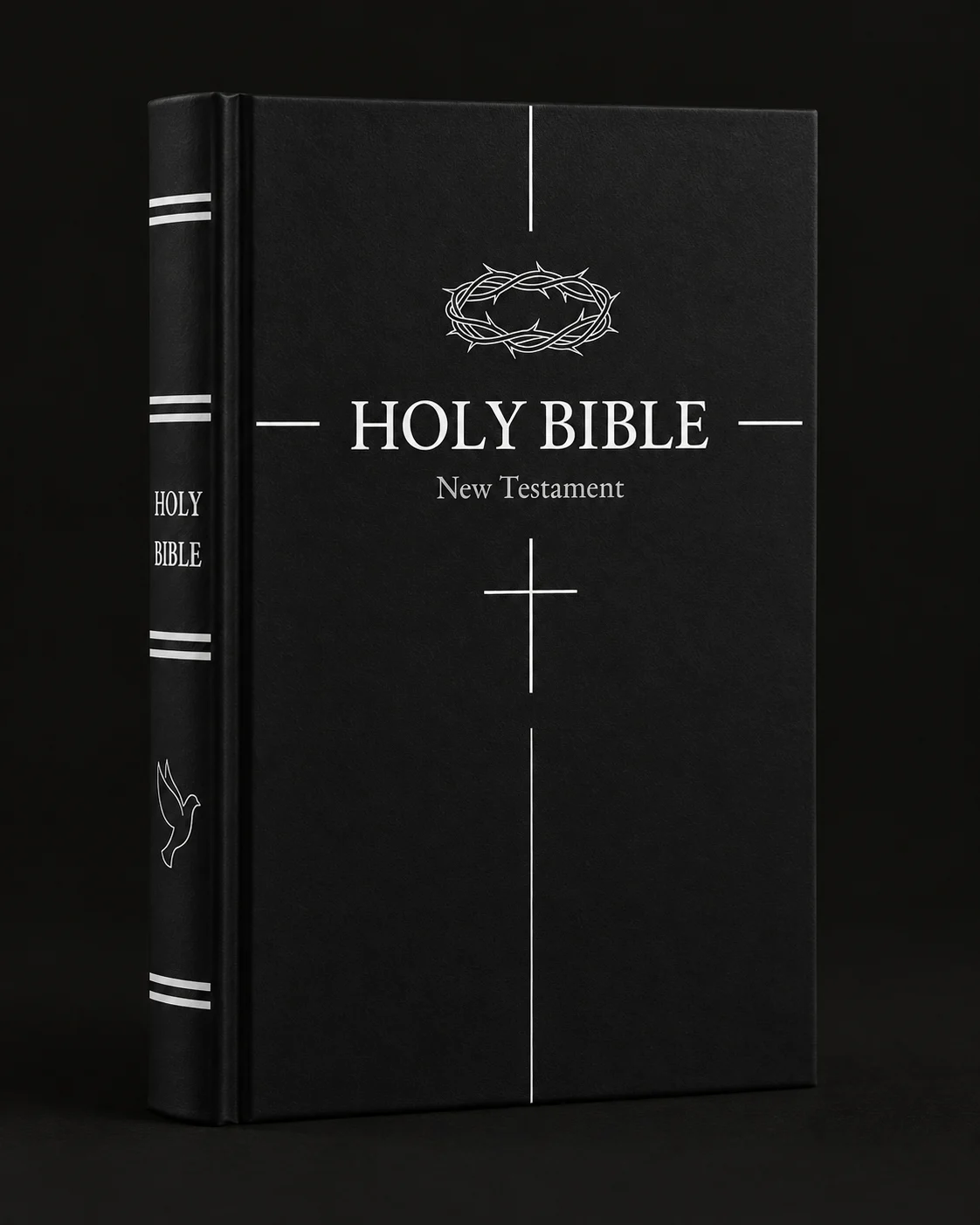
THE PRINTED NEW TESTAMENT
The Black Edition
White text on black pages. Jesus’ words in red.
All 27 New Testament books · English WEB.
Softcover $79 · Hardcover $99 USD · shipping separately
Buy the Black Edition Read a sample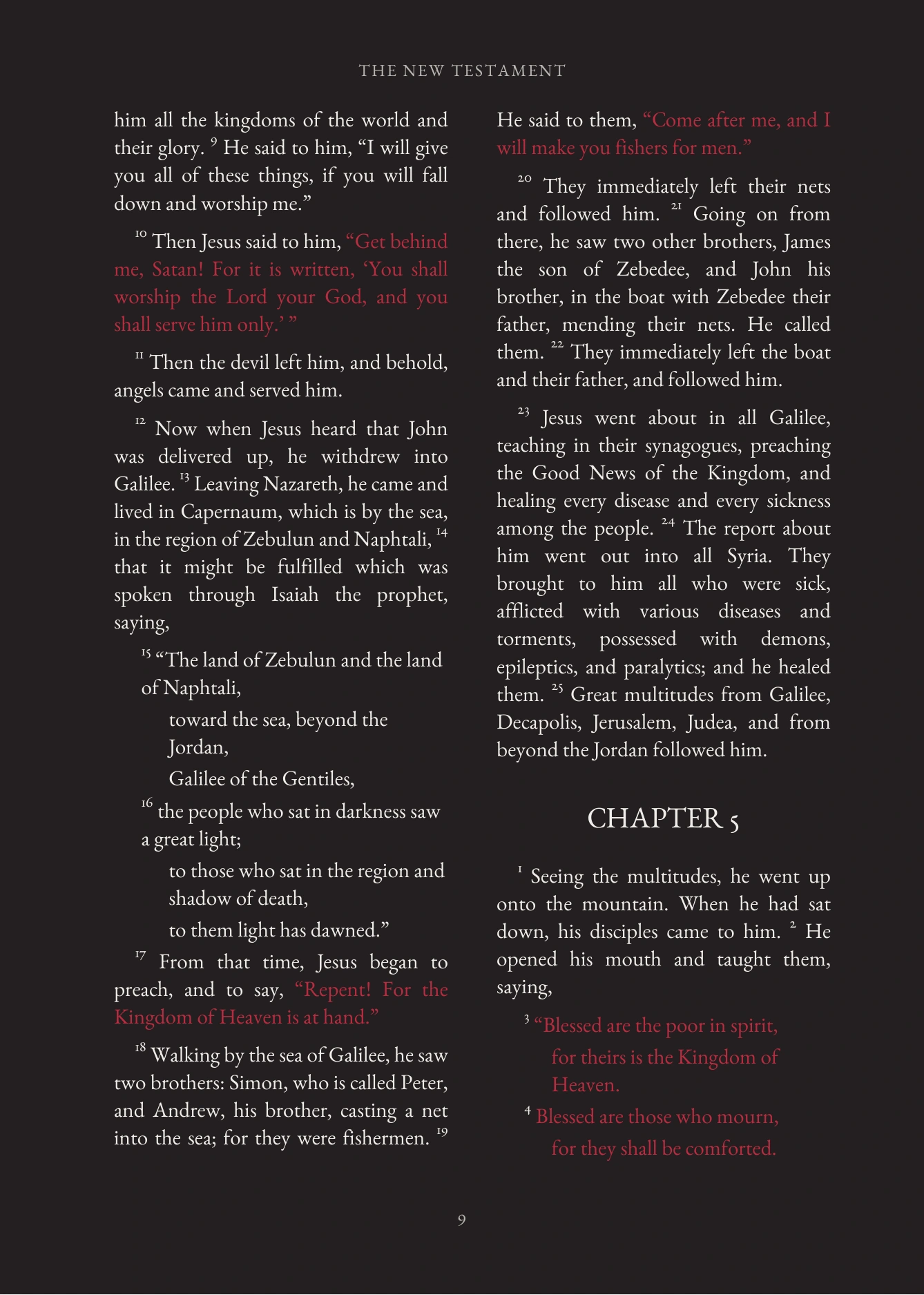
Matthew: begin with the names
Matthew 1 starts by placing Jesus in a family line connected with Abraham and David, then moves to the circumstances of his birth. Read the names and the narrative that follows rather than treating the opening as an obstacle to skip.
For your notebook, ask what the opening tells you before Jesus begins speaking. Keep that question available as you continue. You do not need to recognize every name to notice that ancestry is part of the book’s introduction.
Mark: follow what happens
Mark 1 moves through John’s preaching, Jesus’ baptism and temptation, and the beginning of his public ministry. If you want an opening that gets into those events quickly, try Mark next. This is a suggestion about the first chapter, not a claim that the whole Gospel is simple.
As you read, make a short list of changes in location and of people responding to Jesus. Record what surprises you. Do not assume that something you remember from another Gospel appears in the same place here.
Luke: notice the introduction
Luke 1 begins by addressing Theophilus and explaining the purpose of the account, then turns to the story of Zechariah and Elizabeth. Read that introduction before moving into the narrative. It tells you how the text presents its task.
Try writing down the names of people introduced in the opening chapter and the questions they ask. If you have already read another Gospel, compare only after you have given Luke’s scene a complete reading.
John: take time over the opening language
John 1 begins with the Word, life and light before introducing John’s witness and encounters with Jesus. If you want to spend time following repeated words, this opening gives you plenty to consider.
Circle a repeated word in your notes, then record how it is used in the surrounding sentences. Avoid assigning a meaning from a single occurrence and carrying it unchanged through every later passage. Our separate John 1 guide offers questions for a closer reading of that chapter.
Compare after reading, not instead of reading
Choose one complete scene in each book before placing them side by side. Ask what each account includes and where it begins and ends. Keep uncertainty visible when details differ; a short reading session does not have to resolve every question.
All four Gospels are included in a complete New Testament, including our printed English WEB editions. You do not need a new book to take this next step. Use your existing copy or the free source links below, and choose a print edition only if it suits how you want to read.
Prefer a printed copy? Read the sample before choosing.
Explore the Black Edition