The short answer
For a first Bible, the NIV, the NLT and the CSB are the easiest of the widely used translations to read; the ESV and the NKJV stay closer to the original wording; the KJV is the classic of 1611. The WEB is a modern translation in the public domain. If your church reads one of them, start with that one.
The books of the Bible were written in Hebrew, a little Aramaic and Greek, over many centuries. English readers have had complete Bibles for more than six hundred years, and new translations keep appearing because English changes, scholars learn more about the ancient languages, and older manuscripts come to light. That is why a shop shelf can hold a dozen translations of the same verse.
Word for word, or thought for thought?
Every translator has to decide how closely to follow the original. A word-for-word (formal) translation keeps the original’s words and structure wherever English allows. It is good for close study, but some sentences read stiffly. A thought-for-thought (dynamic) translation renders the meaning of each sentence in natural English. It reads easily, but the translators have made more decisions for you. Most modern translations sit somewhere between the two. A paraphrase, such as The Message, goes further and retells the text in the writer’s own words; many people enjoy it alongside a translation rather than instead of one.
The translations side by side
| Translation | First complete | Approach | Good for |
|---|---|---|---|
| NLT | 1996 | Thought for thought | The easiest reading; first-time readers; reading aloud to others. |
| NIV | 1978 (updated 2011) | Between the two | Everyday reading and group study; one of the most widely used translations. |
| CSB | 2017 | Between the two | Readers who want clear English a little closer to the original. |
| ESV | 2001 | Word for word | Close reading and study; churches that prefer a formal translation. |
| NKJV | 1982 | Word for word | Readers who like the King James but want modern English. |
| KJV | 1611 | Word for word | Its language, memorised verses, churches that read it. |
| WEB | 2020 (begun 1994) | Close to word for word | A modern translation anyone may copy, print and share freely. |
“Easiest” and “closer to the original” here are the general judgement of readers, pastors and the publishers themselves, not a measured score. The quickest honest test is to read the same chapter in two of them and notice which one you understand without effort.
NLT: New Living Translation
Published by Tyndale House in 1996 and revised several times since. It began as a revision of The Living Bible, a 1971 paraphrase, but was translated afresh from the Hebrew and Greek by a team of about ninety scholars. Its translators aimed to say what the original means in the English people speak. If you have never read the Bible and find long sentences hard, start here.
NIV: New International Version
Completed in 1978 by an international committee of scholars, the Committee on Bible Translation, and updated in 1984 and 2011. It aims at a balance between accuracy and readability, and it is the translation many churches, courses and devotional books quote. A safe default if you are not sure.
CSB: Christian Standard Bible
Published in 2017 as a revision of the Holman Christian Standard Bible. Its translators call their approach “optimal equivalence”: as literal as clear English allows. It reads almost as easily as the NIV and keeps a little more of the original structure.
ESV: English Standard Version
Published by Crossway in 2001, a revision of the Revised Standard Version of 1971. Its publisher describes it as “essentially literal”. It is popular for study and preaching. Some sentences are long, so new readers sometimes find it harder going than the NIV or the NLT.
NKJV: New King James Version
Published in 1982. It keeps the structure and the textual basis of the King James Version but replaces “thee”, “thou” and older word forms with modern English. A good bridge if your church or family reads the KJV.
KJV: King James Version
Translated by scholars commissioned by King James I and first printed in 1611; most KJV Bibles today print the revised text of 1769. Its rhythm has shaped the English language, and many of the verses people know by heart are in its words. It uses English of four centuries ago, so it rewards patience.
WEB: World English Bible
A modern translation that its makers dedicated to the public domain, so anyone may print or share it without permission. Its own FAQ describes it as an update of the American Standard Version of 1901 into contemporary English, with the New Testament following the Greek Majority Text. Two things to know: in the Old Testament it uses God’s name, “Yahweh”, where most English Bibles print “the LORD”, and in the New Testament its tone is plain and spoken. Our Black and White Edition New Testaments are printed in the WEB.
The same verses in two translations
We print two translations, the King James Version and the World English Bible, and both are free of copyright, so we can show them in full. (We do not quote the NIV, ESV, NLT or CSB at length here because they are copyrighted; you can compare them on any Bible website.) In each pair the World English Bible comes first, with the King James Version beneath it, and the words of Jesus are in red, as in our red-letter books.
For God so loved the world, that he gave his only born Son, that whoever believes in him should not perish, but have eternal life.
KJVFor God so loved the world, that he gave his only begotten Son, that whosoever believeth in him should not perish, but have everlasting life.
John 3:16 · World English Bible, with the King James Version
The KJV’s “only begotten” and the WEB’s “only born” translate the same Greek word, monogenēs. Modern translations differ here too: the NIV and the ESV have “one and only” or “only”.
Yahweh is my shepherd; I shall lack nothing.
KJVThe LORD is my shepherd; I shall not want.
Psalm 23:1 · World English Bible, with the King James Version
Here you can see the WEB’s use of the name Yahweh, and the KJV’s “I shall not want”, which in today’s English means “I shall lack nothing”.
as newborn babies, long for the pure spiritual milk, that with it you may grow,
KJVAs newborn babes, desire the sincere milk of the word, that ye may grow thereby:
1 Peter 2:2 · World English Bible, with the King James Version
The KJV says “the sincere milk of the word”; the WEB, “the pure spiritual milk”. Both are attempts at one Greek phrase. Neither translation is “the real Bible” and the other a copy: both are careful translations that make different choices.
Setting the same books in both translations for print taught us how close they usually are. Our Gospel of John runs to 64 pages in the King James Version and 64 in the World English Bible; Mark is 52 pages in the KJV and 50 in the WEB. The differences are mostly in vocabulary and rhythm, not in what the text says.
Why a verse can be missing
Occasionally a verse in the King James Version appears only as a footnote in a modern translation. Acts 8:37 is an example. The KJV reads: “And Philip said, If thou believest with all thine heart, thou mayest. And he answered and said, I believe that Jesus Christ is the Son of God.” Most modern translations, including the NIV and the ESV, place it in a footnote, and the World English Bible we print leaves it out of the text, because it is missing from most of the ancient Greek manuscripts. The verse numbers stay the same, so the Bible jumps from 8:36 to 8:38. Nothing is being hidden: translators simply follow different manuscript evidence, and good editions say so in their notes.
How to choose
- Ask your church. Reading along in the same translation as the sermon helps more than any comparison table.
- Read the same passage in two or three translations. John 1 or Luke 15 are good tests. Choose the one you understand without effort.
- Do not worry about choosing wrongly. Most Christians read more than one translation over the years. Comparing two is one of the best ways to understand a hard verse.
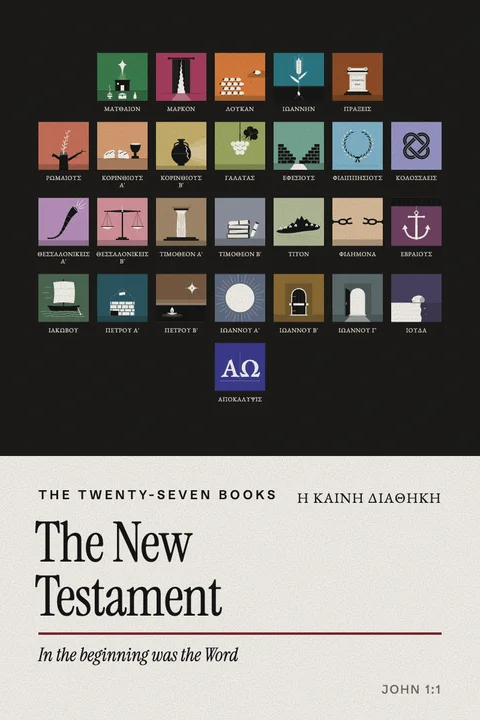
If you want to read in the King James Version or the World English Bible, every book of our illustrated New Testament and of the Five Books of Moses comes in either, chosen at purchase, and our Black and White Edition New Testaments are in the WEB. For the full picture of choosing a first Bible, see Which Bible should I buy as a new Christian?
Questions about translations
Which Bible translation is easiest to understand?
Among the widely used translations, the New Living Translation (NLT) is the easiest to read, followed by the NIV and the CSB. A paraphrase such as The Message is easier still, but it is a retelling rather than a translation.
Which Bible translation is the most accurate?
Every careful translation is accurate in its own way. Word-for-word translations such as the ESV, the NKJV and the KJV keep closer to the original wording; thought-for-thought translations such as the NLT convey the meaning in natural English. Reading two side by side is the best way to see what a verse says.
What is the difference between the KJV and the WEB?
The KJV is the 1611 translation in the English of its time. The WEB is a modern, public-domain update of the American Standard Version of 1901, in contemporary English, with “Yahweh” for God’s name in the Old Testament.
Is the World English Bible a reliable translation?
It is a revision of the American Standard Version of 1901, a respected literal translation, carried out over many years and documented openly by its makers. It is less widely used in churches than the NIV or the ESV, so check which translation your church reads.
Should a beginner use the ESV or the NIV?
Either is a good choice. The NIV is a little easier to read; the ESV is a little closer to the original wording. If your church uses one of them, start with that one.
How we wrote this guide. We print the King James Version and the World English Bible, and every quotation here is taken from the texts in our books. The dates and approaches of the other translations follow their publishers’ own descriptions, listed below. Published 21 October 2026.
Sources and further reading
- About the NIV
- The ESV translation (Crossway)
- About the CSB
- World English Bible FAQ (ebible.org)
- New Living Translation and New International Version (history and revisions)
- WEB and KJV wording compared in John 1 and reading the King James Version