The short answer
No translation needs to be avoided for every purpose, but some are poor fits for certain uses. The New World Translation follows one denomination's theology in key verses such as John 1:1, paraphrases such as The Message and The Passion Translation are not built for close study, and very old versions translated from Latin are hard to use as a main Bible today.
Avoid for what purpose?
Almost every English Bible has readers who value it and use it well, so the fairer question is which translations are a poor fit for a particular job. A paraphrase can be refreshing for reading but weak for settling doctrine. A six-hundred-year-old translation can be precious as history but hard going as a daily Bible. A version made within one denomination will reflect that group's teaching. The notes below set out the main concerns factually, so you can weigh them yourself.
The New World Translation, for comparing doctrine
The New World Translation (NWT) is the Bible of Jehovah's Witnesses, published by the Watch Tower Bible and Tract Society. Its New Testament appeared in 1950, the complete Bible in 1961, and a major revision in 2013.
The best-known point of dispute is John 1:1. The KJV, like many English translations, ends the verse “and the Word was God.” The NWT adds an indefinite article, so the Word is called a god rather than God. Its own study note explains why: the Greek has no definite article before the second use of theos, which the NWT reads as describing the Word's quality rather than identifying him with God Almighty.
Critics, including scholars writing in academic journals, dispute that reading. A 1967 article in the Journal of the Evangelical Theological Society, for example, argued that the NWT's handling of the Greek article in passages about God follows a prior doctrinal position rather than consistent grammar. If you want to understand what Jehovah's Witnesses believe, the NWT is the right primary text; for general study, compare it with a translation produced by scholars from several traditions.
Paraphrases, for close study
A paraphrase restates the Bible freely in contemporary language. That can make familiar passages feel new, but it adds a layer of the paraphraser's interpretation, so it is a weak base for detailed study or for deciding questions of doctrine.
The Message, by Eugene Peterson, appeared in stages between 1993 and 2002 and was revised in 2018. Its publisher places it between paraphrase and dynamic equivalence, says Peterson worked from the Hebrew and Greek with review by teams of scholars, and states that he never considered it a study Bible. The publisher suggests it as a second Bible for a fresh view of a passage, and used that way it is doing what it was made for.
The Living Bible, Kenneth Taylor's paraphrase from the early 1970s, has the same limits. Its publisher, Tyndale, later revised it into the New Living Translation (1996), which was made as a translation from the Hebrew and Greek.
The Passion Translation, for study and teaching
The Passion Translation (TPT) is led by Brian Simmons and published by BroadStreet Publishing. Its publisher calls it a meaning-based translation using what it terms essential equivalence, with the goal of conveying the heart of God to English readers. It is not yet a complete Bible: the New Testament is finished, some Old Testament books have been released, and the publisher expects the whole Bible around 2029.
TPT has drawn sharp criticism from biblical scholars. A 2018 review of its Psalms in the journal Themelios, by an Old Testament scholar at Moore Theological College in Sydney, argued that it shows little grasp of textual criticism or of its sources and adds so much material that the text becomes substantially longer than the original. Other critics argue it should be labeled a paraphrase rather than a translation. In early 2022, Bible Gateway stopped carrying TPT; the publisher said no explanation was given.
If you enjoy TPT devotionally, read it alongside a standard translation, and avoid building teaching on wording that appears only in TPT.
Very old translations, as an everyday Bible
Some historic Bibles are treasures but hard to use as a main text today. Wycliffe's Bible (about 1382 to 1395) is in Middle English and was translated from the Latin Vulgate rather than from Hebrew and Greek. The Douay-Rheims Bible (New Testament 1582, Old Testament 1609 to 1610) was also translated from the Vulgate, checked against Hebrew and Greek sources; Bishop Richard Challoner revised it between 1749 and 1752, and some traditional Catholics still use it.
Facsimiles of the first 1611 King James Bible belong in the same group. The translation is the KJV, but the original 1611 spelling makes it slow reading; most modern KJV printings use the 1769 standard text, which regularized spelling and punctuation.
Be careful, too, with any edition that does not name its translation or translators on the copyright page, or that pairs Scripture with notes promoting one teacher's views. That is not proof of a problem, but it is a reason to check.
How to judge any translation
Whatever Bible you are considering, five questions will tell you most of what you need to know.
- Who translated it: a committee drawn from several churches, or one person or one group?
- Which texts it uses: the preface should name its Hebrew and Greek sources.
- What it calls itself: a translation, a paraphrase, or something in between.
- Whether it flags uncertainty: footnotes on alternative readings are a good sign.
- Whether it fits your purpose: study, reading, worship or teaching children.
From our shelf
The translations we print
We print four public-domain texts: the King James Version, the World English Bible, the Lutherbibel 1912 and the Danish 1871/1907. We do not print a complete Bible, and not the NIV, ESV or other modern translations; for those, a bookshop or your church is the place.
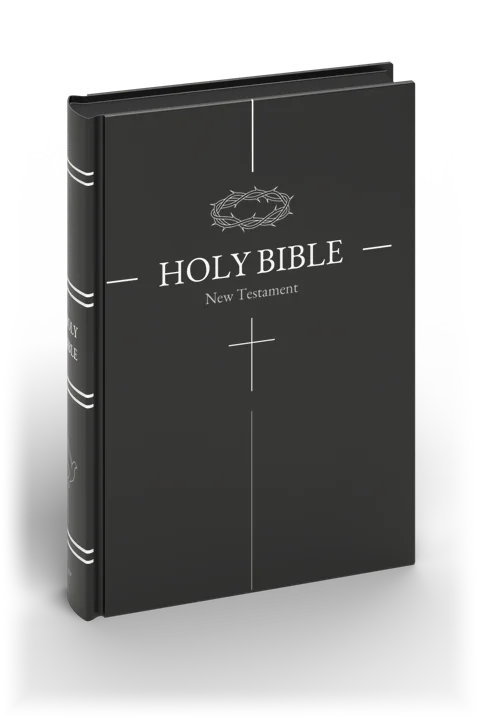
The Black Edition, King James Version
The complete New Testament in the KJV (the standard 1769 text), white text on black pages, the words of Jesus in red. A5, 392 pages.
Softcover $60 · Hardcover $80 · eBook $10 USD
See the KJV Black Edition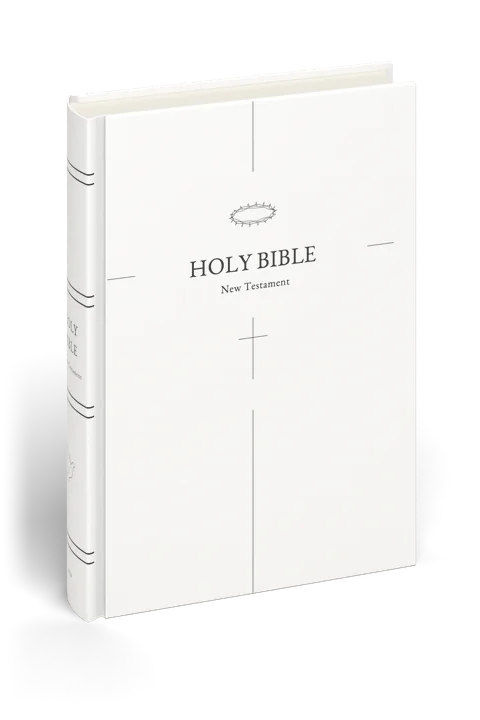
The White Edition New Testament
The same New Testament in classic black type on white pages, the words of Jesus in red. KJV, WEB, German or Danish.
Softcover $60 · Hardcover $80 · eBook $10 USD
See the White Edition
Prices in USD, tax included; shipping is calculated at checkout and free over $80. Printed books are printed to order; eBooks are a PDF and an ePub, emailed after payment.
Questions
More questions people ask
Is the NIV a translation to avoid?
No. It is a mainstream translation made by a committee of scholars from a broad range of denominations. Some readers prefer the KJV because the NIV follows a different Greek text and places verses such as Acts 8:37 in footnotes, but that reflects a difference in textual judgment, not an unreliable translation.
Is The Message a real Bible translation?
Its publisher describes it as standing between a paraphrase and a dynamic-equivalence translation, made by one translator from the original languages and reviewed by scholars. It is best used as a readable companion rather than a study Bible, which is how its publisher presents it.
Should I avoid the King James Version because it is old?
Not necessarily. It remains a widely used word-for-word translation, and most printings use the 1769 standard text. The main hurdle is vocabulary: some words have changed meaning since 1611, so a glossary or a modern translation alongside it helps.
Why do Jehovah's Witnesses use the New World Translation?
It is produced by their own publisher, the Watch Tower Bible and Tract Society, and its renderings of verses such as John 1:1 match their teaching. Its study notes explain the reasoning for those choices.
Sources
- jw.org: NWT Christian Greek Scriptures first released August 2, 1950; complete NWT 1961; latest revision 2013; Watch Tower Bible and Tract Society of Pennsylvania
- jw.org: NWT renders the last clause of John 1:1 with 'a god'; study note explains the absence of the article as describing quality, and notes many translators prefer 't…
- galaxie.com: Robert H. Countess, 'The Translation of THEOS in the New World Translation', Bulletin/Journal of the Evangelical Theological Society 10.3 (1967): argues the NWT…
- en.wikipedia.org: KJV John 1:1 wording (public domain)
- messagebible.com: The Message: dates 1993-2002, 2018 revision; between paraphrase and dynamic equivalence; sole translator Eugene Peterson working from Hebrew and Greek with scho…
- en.wikipedia.org: The Living Bible was Kenneth N. Taylor's paraphrase published in the early 1970s; the NLT began as its revision
- sites.tyndale.com: Tyndale: NLT began as a revision of The Living Bible, designed as a translation from Hebrew and Greek; first edition 1996
- thepassiontranslation.com: TPT: meaning-based, 'essential equivalence', aims to convey the heart of God
- thepassiontranslation.com: TPT: lead translator Brian Simmons; publisher BroadStreet; NT complete, some OT books released, full Bible expected around 2029
- thegospelcoalition.org: Themelios 43.1 (2018) review of TPT Psalms by Andrew Shead (Moore Theological College): little understanding of textual criticism or sources
- acl.asn.au: Summary of the Themelios review: substantial added material, text at least 50% longer than the original
- christiantoday.com: Bible Gateway discontinued its TPT licence in January 2022; BroadStreet said no explanation was given; critics say TPT should be classed as paraphrase
- en.wikipedia.org: Wycliffe's Bible: about 1382-1395, Middle English, translated from the Latin Vulgate
- en.wikipedia.org: Douay-Rheims: NT 1582, OT 1609-1610, from the Vulgate checked against Hebrew and Greek; Challoner revision 1749-1752; still used by some traditional Catholics
- thenivbible.com: NIV translators come from a broad spectrum of denominations
- biblegateway.com: NIV places Acts 8:37 in a footnote