
The short answer
By sales, the five most popular Bible translations in the US are the NIV, ESV, KJV, NLT and NKJV, in that order on the Evangelical Christian Publishers Association's Bible Translations list dated October 2026. By what people say they read, the King James Version has led American Bible Society surveys: in the State of the Bible 2018 report, 33% preferred the KJV and 14% the NIV.
The top 5 by sales: ECPA, October 2026
The clearest sales data comes from the Evangelical Christian Publishers Association (ECPA). Its monthly Bible Translations list, built on Circana BookScan retail data, ranks each translation by the combined sales of full Bibles from ECPA member publishers in the previous month. On the list dated October 2026, the top five were as follows.
| Rank | Translation | First complete Bible | Approach (publisher's description) |
|---|---|---|---|
| 1 | New International Version (NIV) | 1978 (updated 1984 and 2011) | Balances accuracy, readability and clarity |
| 2 | English Standard Version (ESV) | 2001 | Essentially literal |
| 3 | King James Version (KJV) | 1611 (standard text 1769) | Word-for-word |
| 4 | New Living Translation (NLT) | 1996 | Dynamic equivalence (thought-for-thought) |
| 5 | New King James Version (NKJV) | 1982 | Complete equivalence |
Places 6 to 10, and how stable the ranking is
Places six to ten on the October 2026 list were the Reina-Valera (Spanish), the Christian Standard Bible, the New American Standard Bible, the New Revised Standard Version and the New International Reader's Version. The same five translations, in the same order, also led ECPA's lists dated January and September 2026, so the top five is a steady pattern rather than a one-month result.
Keep the limits of the list in mind. It counts printed full Bibles from ECPA member publishers sold through reporting retailers. It does not count Bible apps and websites, partial Bibles such as standalone New Testaments, or books from publishers that are not ECPA members.
What Americans say they read: American Bible Society data
Sales show what people buy now; surveys show what they actually read, including Bibles bought decades ago. The American Bible Society's annual State of the Bible research, carried out by Barna, has asked which version of the Bible people prefer. In every year we could verify, the King James Version came first by a wide margin.
| Year | Survey | KJV | NIV | Other figures reported |
|---|---|---|---|---|
| 2015 | State of the Bible 2015 (American Bible Society, Barna), Bible readers | 39% | 13% | NKJV 10%, ESV 8% |
| 2017 | State of the Bible 2017 (American Bible Society, Barna), Bible users | 31% | not verified | KJV still the most preferred |
| 2018 | State of the Bible 2018 (American Bible Society, Barna) | 33% | 14% | NIV up from 10% in 2011 |
Reading trends behind the numbers
The 2018 report noted that preference for the KJV had fallen seven percentage points since 2016 and twelve since 2011, while interest in the NIV was growing. That 2018 breakdown is the most recent American Bible Society translation figure we could verify; we did not find a translation breakdown in later State of the Bible releases.
A separate 2014 study, The Bible in American Life from the Center for the Study of Religion and American Culture at IUPUI, found an even larger lead: 55% of Bible readers named the KJV as the version they read, and 19% the NIV.
The two kinds of data answer different questions. A Bible lasts a long time, so survey answers include family Bibles and gifts that may be decades old, while sales lists show what people choose when they buy today. Preferring a translation is also not the same as buying one this month.
The five most popular translations in brief
NIV. Produced by an independent Committee on Bible Translation that first met in 1965, the NIV aims to balance closeness to the original with clear modern English. The committee meets every year to review scholarship and changes in English; the current edition dates from 2011.
ESV. Published by Crossway in 2001 as an essentially literal translation, the ESV is designed for study, public reading and preaching. Its New Testament is based on the standard UBS and Nestle-Aland Greek editions.
KJV. First published in 1611 and standardized in 1769, the King James Version translates the Hebrew Masoretic Text and the Greek Textus Receptus word for word. It is in the public domain in most of the world, though the Crown holds rights in the United Kingdom.
NLT. Tyndale House published the NLT in 1996 as a translation from the Hebrew and Greek that grew out of a revision of The Living Bible. Its publisher classifies it as dynamic equivalence, which makes it the easiest of the five to read.
NKJV. Thomas Nelson completed the NKJV in 1982 to update the King James language while keeping its Greek text and much of its style. Its footnotes show where other Greek editions differ.
Popular is not the same as right for you
A best-seller list shows what other people buy, not what you need. If you plan to study word by word, the formal translations on this list (ESV, NKJV and KJV) and the NASB are built for that. If you want to read long stretches with ease, the NIV or NLT may serve you better. Our guide to the best Bible translation by purpose walks through each use, from study to reading aloud to a child's first Bible.
From our shelf
The translations we print
We print four public-domain texts: the King James Version, the World English Bible, the Lutherbibel 1912 and the Danish 1871/1907. We do not print a complete Bible, and not the NIV, ESV or other modern translations; for those, a bookshop or your church is the place.
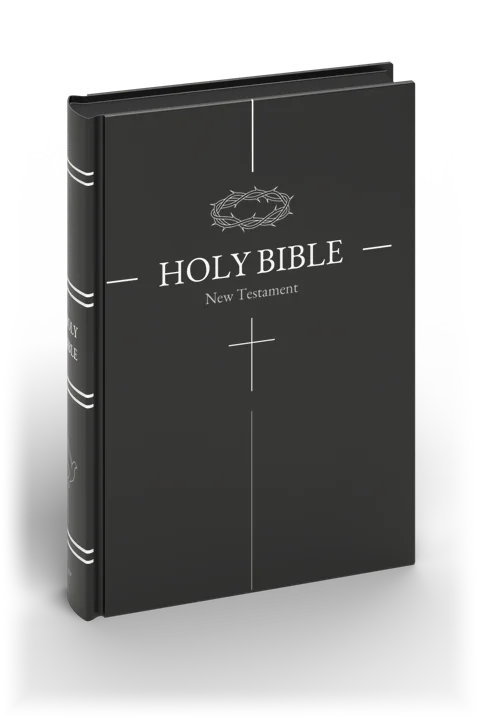
The Black Edition, King James Version
The complete New Testament in the KJV (the standard 1769 text), white text on black pages, the words of Jesus in red. A5, 392 pages.
Softcover $60 · Hardcover $80 · eBook $10 USD
See the KJV Black Edition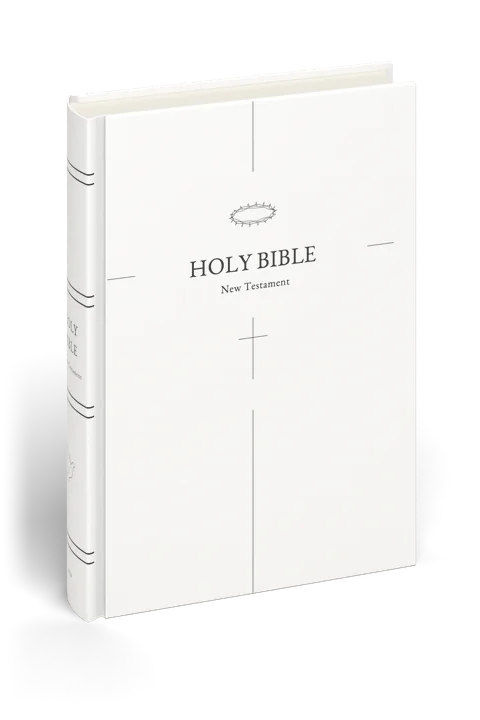
The White Edition New Testament
The same New Testament in classic black type on white pages, the words of Jesus in red. KJV, WEB, German or Danish.
Softcover $60 · Hardcover $80 · eBook $10 USD
See the White Edition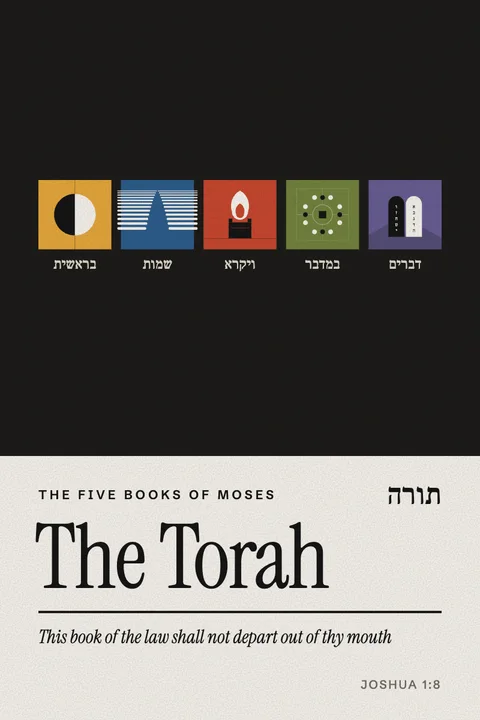
The Torah: the Five Books of Moses
Genesis to Deuteronomy, complete, in one volume with 31 full-page illustrations, or as five books. King James Version or World English Bible.
Softcover $60 · Hardcover $90 · eBook $10 USD
See the Torah
Prices in USD, tax included; shipping is calculated at checkout and free over $80. Printed books are printed to order; eBooks are a PDF and an ePub, emailed after payment.
Questions
More questions people ask
Which Bible translation do most pastors use?
No recent, large public survey settles this. The most-cited one, a 2004 Ellison Research survey of 700 Protestant pastors for LifeWay's Facts & Trends magazine, found that 31% used the NIV, 23% the KJV, 14% the NRSV, 13% the NKJV and 10% the NASB, with big differences by denomination: 45% of Pentecostal pastors used the KJV, and Lutheran pastors most often used the NRSV. The ESV was then only three years old and the CSB did not yet exist, so the picture has likely changed. The NIV's publisher says the NIV is still the most frequently used translation in US churches.
What is the best-selling Bible translation?
The New International Version. It ranked first on ECPA's Bible Translations lists dated January, September and October 2026.
Is the King James Version still popular?
Yes. It ranked third in sales on ECPA's October 2026 list, and it led every American Bible Society survey of preferred translations that we could verify, from 2015 to 2018.
Why do sales rankings and reading surveys disagree?
Sales lists measure Bibles bought in a given month, while surveys ask which version people read or prefer, including Bibles they have owned for years. The KJV does especially well in surveys; modern translations lead current sales.
Sources
- readgoodbooks.com: ECPA Bible Translations list dated October 2026: 1 NIV, 2 ESV, 3 KJV, 4 NLT, 5 NKJV, 6 Reina Valera, 7 CSB, 8 NASB, 9 NRSV, 10 NIrV; lists rank previous month's…
- readgoodbooks.com: ECPA list dated September 2026: same top five in same order
- readgoodbooks.com: ECPA list dated January 2026: same top five in same order
- readgoodbooks.com: ECPA methodology: top 10 Bible translations sum the sales of each translation sold as a full Bible; based on previous month's BookScan data
- christianitytoday.com: State of the Bible 2015 (ABS, Barna): KJV 39%, NIV 13%, NKJV 10%, ESV 8% among Bible readers; article dated April 9, 2015
- scripture-engagement.org: State of the Bible 2017 (ABS, Barna): KJV preferred by 31% of Bible users
- americanbible.org: State of the Bible 2018 (ABS): KJV 33%, NIV 14% (up from 10% in 2011); KJV down 7 points since 2016 and 12 since 2011; post dated July 10, 2018
- research.lifeway.com: 2014 Bible in American Life study (IUPUI Center for the Study of Religion and American Culture): KJV 55%, NIV 19% of Bible readers
- crosswalk.com: 2004 Ellison Research survey of 700 pastors for Facts & Trends: NIV 31%, KJV 23%, NRSV 14%, NKJV 13%, NASB 10%; Pentecostal 45% KJV; Lutherans 48% NRSV
- thenivbible.com: NIV publisher says the NIV remains the most frequently used translation in churches across the US; committee formed 1965; NIV published 1978
- thenivbible.com: NIV: Committee on Bible Translation meets every year; latest update published 2011
- biblegateway.com: NIV copyright years 1973, 1978, 1984, 2011
- thenivbible.com: NIV publisher describes a balance of accuracy, readability and clarity
- esv.org: ESV essentially literal; copyright from 2001
- biblestudytools.com: ESV NT based on UBS 5th corrected edition (2014) and Nestle-Aland 28th edition (2012)
- en.wikipedia.org: KJV 1611; Masoretic Text and Textus Receptus; 1769 Blayney standard text; perpetual Crown copyright in UK, de facto public domain elsewhere
- sites.tyndale.com: NLT: dynamic equivalence; revision of The Living Bible; first edition 1996
- bible-researcher.com: NKJV: complete equivalence; Textus Receptus with NU and M footnotes; full Bible 1982
- bhpublishinggroup.com: CSB first released March 2017
- biblegateway.com: Reading levels: NLT 6, NIV 7, NKJV 9, ESV 10, KJV 12