The short answer
A reader’s Bible prints the text like an ordinary book: usually a single column, no study notes or cross-references, and verse numbers removed or made very small, so you read whole books rather than single verses. Some come as one volume per section or book. They are made for long, unhurried reading; for looking up a verse in church, a standard Bible is quicker.
Most Bibles are designed for reference: two narrow columns, a verse number every line, cross-references and notes. That is ideal for finding John 3:16 in a hurry and poor for reading Luke in an evening. Reader’s Bibles set the books as what they are: letters, stories, poems and histories.
They read in the book, in the law of God, distinctly; and they gave the sense, so that they understood the reading.
KJVSo they read in the book in the law of God distinctly, and gave the sense, and caused them to understand the reading.
Nehemiah 8:8 · World English Bible, with the King James Version
What makes a reader’s Bible
- Single column. Lines of normal length, set like a novel, with poetry set as poetry.
- Verse numbers removed or quiet. Some editions remove verse numbers entirely and keep chapter numbers small in the margin; others keep tiny verse numbers in the text.
- No notes or cross-references. Nothing between you and the text. Section headings, which are not part of the original, are often removed too.
- Room on the page. Wider margins, larger type, thicker paper than a standard Bible. That is why many come in several volumes.
Some well-known reader’s Bibles
The ESV Reader’s Bible from Crossway removes verse numbers and notes, and has appeared as a single volume and as a six-volume set. Bibliotheca, crowdfunded in 2014, set the whole Bible in several volumes with no chapter or verse numbers. The Books of the Bible from Biblica prints the NIV without chapters and verses and arranges the books in an order meant to reflect how they were written and collected. We do not sell any of these; they show the range of what “reader’s Bible” can mean, from a quieter page to a complete rethinking of the book.
Reader’s Bible, reading Bible, study Bible
| Kind | On the page | Best for |
|---|---|---|
| Study Bible | Text plus notes, introductions, cross-references and maps. | Answering questions as you read; Bible study. |
| Standard (reference) Bible | Two columns, a verse number on every line, sometimes cross-references. | Finding a verse quickly; following along in church. |
| Reader’s Bible | Single column, few or no numbers, no notes. | Reading whole books; long, slow reading. |
Most readers end up with two: one they read and one they look things up in. Our article Reading Bible vs Study Bible goes further, and how to read a two-column Bible explains the standard layout.
The trade-offs
- Finding a verse is slower. Without verse numbers you cannot follow a sermon that jumps from Romans 8:28 to Psalm 23. Most people keep an app or a standard Bible for that.
- Multi-volume sets take shelf space, and you carry only part of the Bible at a time. Some readers see that as an advantage: one book in the bag, the rest at home.
- Price. Wide margins, thick paper and several volumes cost more than a mass-market Bible.
Where our books fit: minimalist, one book at a time
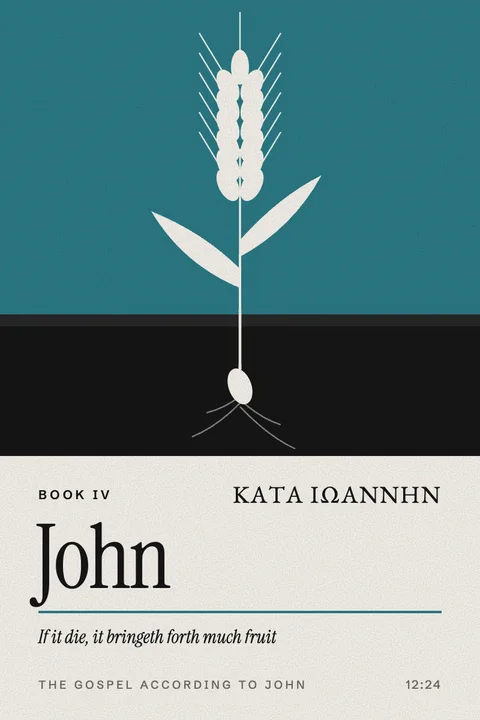
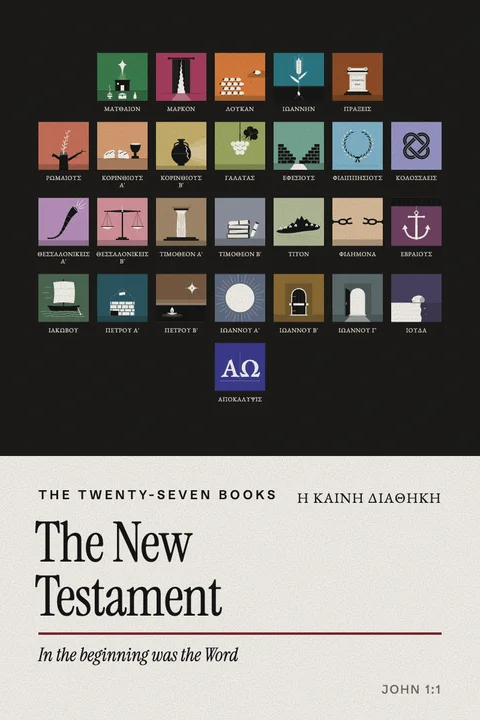
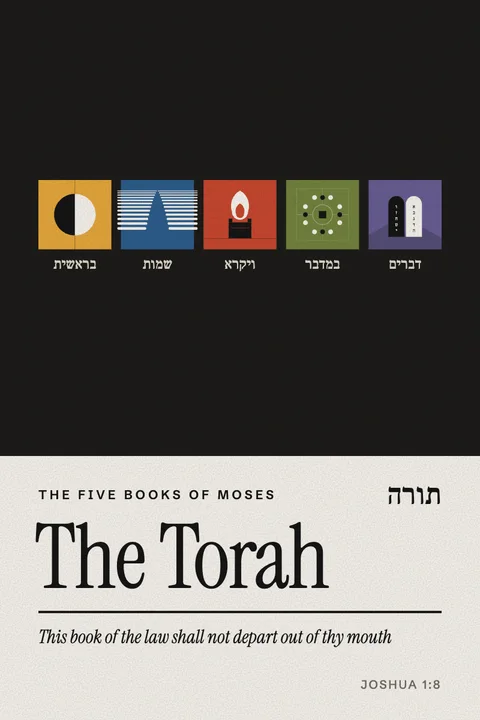
Our New Testament and Five Books of Moses are close to a reader’s Bible, with two differences we chose on purpose. We print each book of the Bible as its own slim volume, in a single column with generous margins, the verses running on as continuous prose, the way the book reads aloud. But we keep small raised verse numbers so you can still find a verse, and we add short section headings, which the note at the front of each book says are not part of the biblical text. A few full-page illustrations mark the turning points, and the words of Jesus are printed in red. In the words of the note at the front of each of our books: “The verses run on as continuous prose, the way the book reads aloud.” Set this way, the whole Gospel of John, 21 chapters, fits in a 64-page book you can read in an evening or two.
- A single Gospel, Acts or Revelation, or a volume of letters: softcover $35, hardcover $45, eBook $10. Mark is the shortest Gospel; John the usual first one.
- The New Testament in one volume: softcover $75, hardcover $90, eBook $10.
- Genesis to Deuteronomy, as five books ($35 each as a softcover) or one Torah volume ($60).
- The King James Version (the standard 1769 text) or the World English Bible, chosen at purchase.
Buying five or more printed books gives 10% off the books in the bag, which suits anyone building the series one book at a time. If you would rather have no verse numbers at all, or the whole Bible, one of the editions above will suit you better.
How to read a reader’s Bible
- Read a whole book. Mark in one sitting takes about an hour and a half. Philippians takes fifteen minutes.
- Read aloud when you can. Much of the Bible was written to be heard.
- Keep a reference Bible or an app nearby for looking things up afterwards, not during.
If you do not know where to start, our guide where to start reading the New Testament suggests an order.
Questions about reader’s Bibles
What is a reader’s Bible?
A Bible designed for continuous reading: usually a single column, no notes or cross-references, and verse numbers removed or very small, sometimes in several volumes.
What is the most reader-friendly Bible?
For layout, a single-column reader’s Bible; for language, a readable translation such as the NLT or the NIV. The two together make the easiest reading. Choose the translation first.
Is there a Bible without verse numbers?
Yes. Several reader’s Bibles remove verse numbers entirely, among them editions of the ESV and the NIV and the multi-volume Bibliotheca. Our books keep small verse numbers so a verse can still be found.
What is a minimalist Bible?
A Bible designed with as little as possible on the page and the cover: no notes, a quiet layout and a simple design. Ours print each book of the Bible as its own volume with one colour, one symbol and one verse on the cover.
Is a reader’s Bible good for Bible study?
It is good for reading whole books, which is the foundation of study. For detailed study, add a standard or study Bible with cross-references and notes.
How we wrote this guide. We design minimalist books of the Bible, so we have an interest; the guide describes other reader’s Bibles that may suit you better. Their details follow their publishers’ descriptions, linked below, and editions change, so check the current one before you buy. The quotation is from the World English Bible and King James texts we print. Published 26 October 2026.
Sources and further reading
- ESV Reader’s Bible (Crossway)
- Bibliotheca (history of the multi-volume edition)
- Reading Bible vs Study Bible
- How to read Bible chapter and verse numbers