The short answer
From about 8, most children are ready to move from a storybook Bible to the Bible itself in an easy translation, read with a parent at first. Children’s translations such as the NIrV and the ICB are written for young readers; by 11 or 12 many read the NLT or the NIV. Alongside it, an illustrated book that covers fewer stories in more depth can be the one they actually ask for at bedtime. We make one for Genesis; it is a retelling, not a Bible.
“Which Bible should my child have?” hides two questions: what can they read alone, and what will we read together? At 8 the answers differ; at 12 they are almost the same. This guide covers both, including the many good children’s Bibles we do not make.
What changes between 8 and 12
- Around 8 to 9: most children read short chapter books on their own, but long Bible passages with unfamiliar names are still hard. They love stories with pictures and can follow a story read aloud that is well above their own reading level.
- Around 10 to 11: many can read a Gospel in an easy translation by themselves, a chapter at a time, and they begin to ask the hard questions: why God allowed the flood, why Joseph’s brothers did what they did.
- Around 12: many are ready for a full translation used by adults, and some want the one their parents or church read. This is the age at which confirmation preparation starts in many churches.
Every child is different; reading level matters more than age.
Three kinds of Bible for children
Storybook Bibles
A storybook Bible retells a selection of stories in its own words, with pictures on every page. The best-known ones, such as The Jesus Storybook Bible, are written for reading aloud to younger children and stay popular well into the primary years. They are a wonderful start, but they are retellings: the child is not yet reading Scripture itself.
Children’s translations
The New International Reader’s Version (NIrV) and the International Children’s Bible (ICB) are complete translations written in shorter sentences and simpler words for young readers. Many children’s Bibles print one of them with illustrations, maps and short introductions. They are a good bridge between 8 and 11: real chapters and verses, in words a child can manage.
A full translation
From about 11 or 12 many children are happy with the NLT, the most readable of the main adult translations, or the NIV. If your church reads a particular translation, a child who can follow along on Sunday feels included. Our guide Bible translations explained compares the main ones.
We do not sell any of these; you will find them in any Christian bookshop. What we make sits alongside them.
Read it together
The Bible itself assumes children will hear it from the adults around them:
These words, which I command you today, shall be on your heart; and you shall teach them diligently to your children, and shall talk of them when you sit in your house, and when you walk by the way, and when you lie down, and when you rise up.
KJVAnd these words, which I command thee this day, shall be in thine heart: And thou shalt teach them diligently unto thy children, and shalt talk of them when thou sittest in thine house, and when thou walkest by the way, and when thou liest down, and when thou risest up.
Deuteronomy 6:6–7 · World English Bible, with the King James Version
Paul reminds Timothy that he had known the Scriptures “from infancy” (2 Timothy 3:15), and he names the faith of Timothy’s grandmother Lois and mother Eunice (2 Timothy 1:5). A few habits help:
- Short and regular. Ten minutes at bedtime or after dinner, three or four times a week, does more than an hour on Sunday afternoon.
- Read aloud, then ask. One question is enough: “What surprised you?” or “Who in the story was brave?”
- Do not skip the hard parts, but frame them. Genesis has a murder, a flood and a family torn apart. Children notice when an adult avoids a question; it is better to say “that is hard, let us think about it together”.
- Let them hold the book. A book of their own, with their name in it, changes how a child feels about reading it.
Our guides reading Genesis 1–2 with children and twelve questions for reading Genesis as a family give ready-made questions.
Where our illustrated Genesis fits
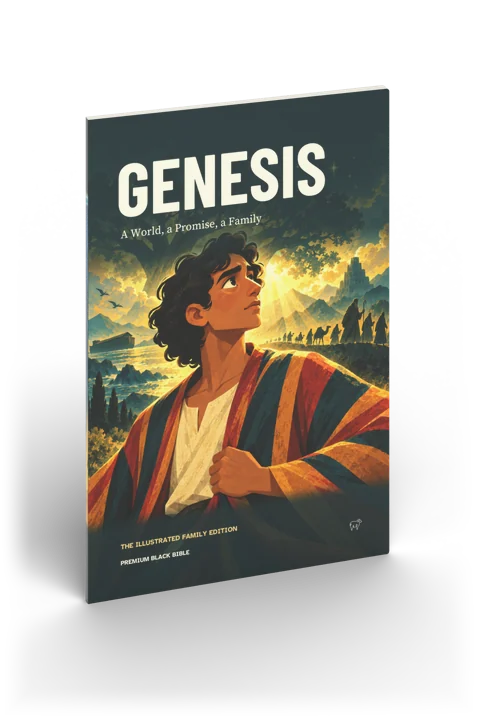
Genesis: A World, a Promise, a Family is an illustrated family edition for ages 8 to 12. It tells twelve stories from Genesis, from creation to Joseph, in original narration written to be read aloud, with 38 full-colour illustrations that run to the edges of the page, questions to talk about after each story, and notes for grown-ups on the difficult parts. It is 52 pages, 6 × 9 in. When we laid it out, we opened every story on a full-bleed illustration and set the narration large enough to read aloud.
To be clear about what it is: it is not a Bible and not a translation. It retells selected stories; it does not reproduce every passage or verse of Genesis, and the illustrations are interpretations. It is meant to be read with a parent, and to send the family back to the Bible itself; our article a Genesis retelling or a Bible translation? explains the difference. If you want one book that does everything, choose a children’s Bible; if you want one part of the Bible to come alive at bedtime, this is what we made it for.
- Softcover $25, hardcover $40, or eBook $10 (a PDF and an ePub, emailed right after payment).
- In English, German or Danish, with the same illustrations: useful for grandparents and bilingual families.
When they are ready for more
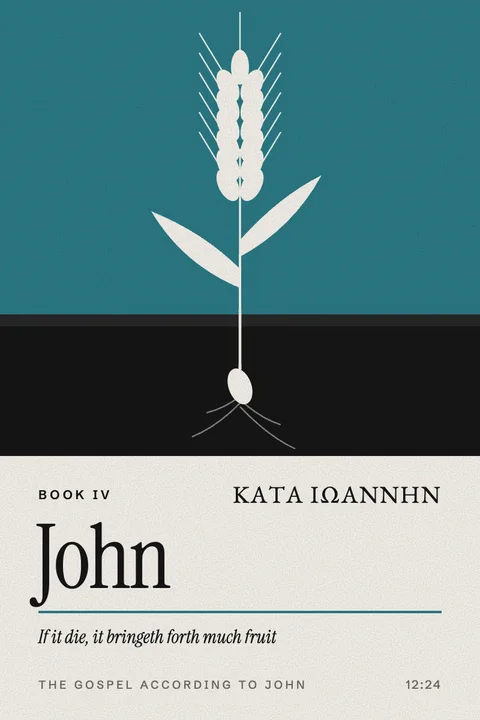
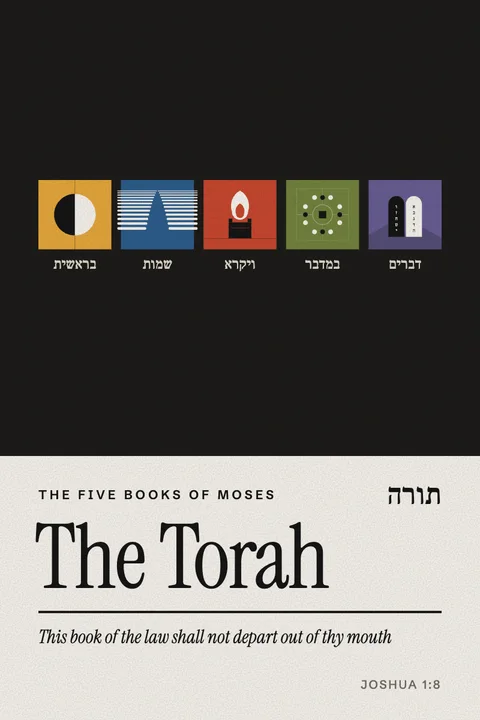
For a child of 11 or 12 who reads well, one book of the Bible on its own can be the next step. A slim volume they can finish feels like an achievement in a way a thousand-page Bible does not. Our Gospel of Mark, the shortest Gospel, and Gospel of John are each printed as their own illustrated book, the words of Jesus in red, in the King James Version or the World English Bible: $35 as a softcover. A child who has read Genesis as stories can also go on to the full text in the Five Books of Moses, when they are older.
But when Jesus saw it, he was moved with indignation and said to them, “Allow the little children to come to me! Don’t forbid them, for God’s Kingdom belongs to such as these.
KJVBut when Jesus saw it, he was much displeased, and said unto them, Suffer the little children to come unto me, and forbid them not: for of such is the kingdom of God.
Mark 10:14 · World English Bible, with the King James Version
Questions parents ask
Which version of the Bible is good for children?
For ages 8 to 10, a children’s translation such as the NIrV or the ICB, often in an illustrated children’s Bible. From about 11 or 12, many children read the NLT or the NIV, or the translation their church uses.
What Bible is good for a 7 or 8 year old?
A storybook Bible read aloud, or an illustrated children’s Bible in an easy translation such as the NIrV or the ICB. At this age reading together matters more than which edition you choose.
Is there a children’s book of Genesis?
Yes. Our illustrated family edition, Genesis: A World, a Promise, a Family, retells twelve stories from Genesis for ages 8 to 12, with questions and notes for grown-ups. It is a retelling, not a Bible translation.
Should a child have a storybook Bible or a real Bible?
Often both. A storybook Bible makes the stories vivid; a real Bible in an easy translation teaches them to read Scripture itself. Many families move from the first to the second between 8 and 11.
How do I explain hard Bible stories to children?
Read them, do not skip them, and talk about them: what happened, how the people felt, and what God did. Our Genesis edition includes notes for grown-ups on the difficult stories.
How we wrote this guide. We made the illustrated Genesis family edition and tested its stories by reading them aloud; the ages and reading stages here are general guidance, not a measured standard. The children’s Bibles and translations we mention are ones we do not sell. The quotations are from the World English Bible and King James texts we print. Published 26 October 2026.