A Bible reference gives you an address inside a book. In John 3:16, “John” names the book, “3” is the chapter and “16” is the verse. You do not need to know the page number, which changes between printed editions.
How to Read Bible Chapter and Verse Numbers
Learn to find a Bible reference, distinguish numbered books, and read ranges with worked examples.
Go straight to the guide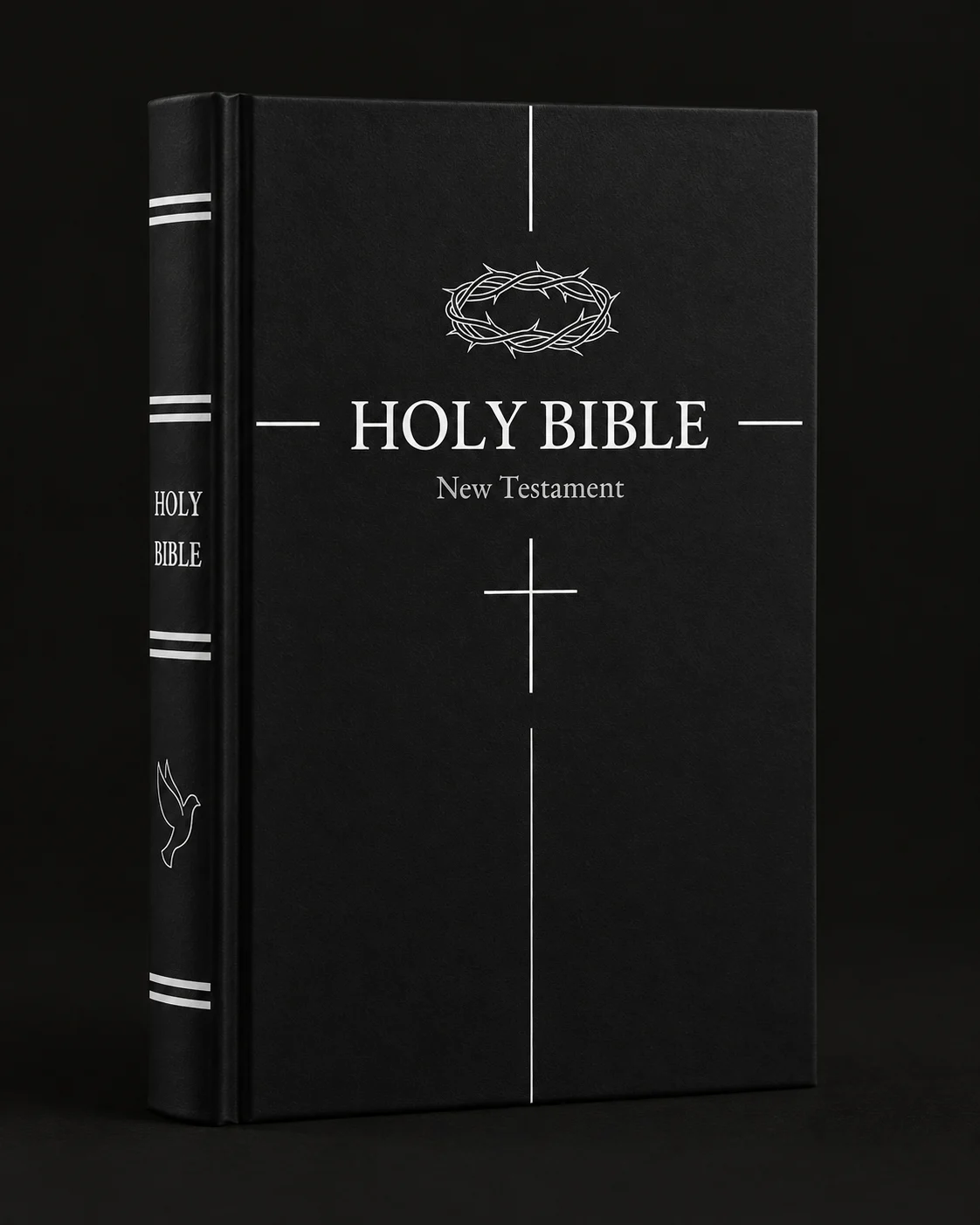
THE PRINTED NEW TESTAMENT
The Black Edition
White text on black pages. Jesus’ words in red.
All 27 New Testament books · English WEB.
Softcover $79 · Hardcover $99 USD · shipping separately
Buy the Black Edition Read a sample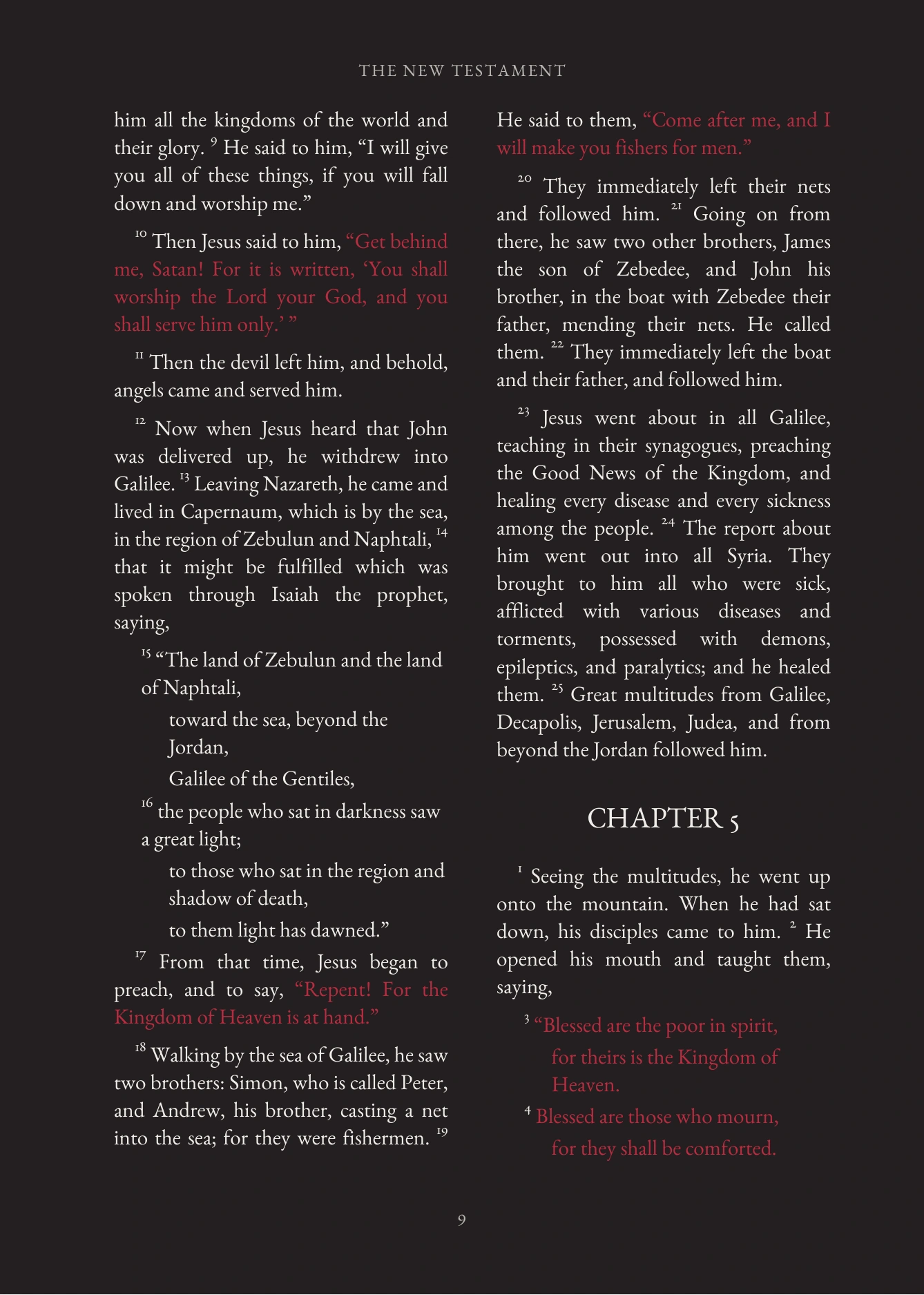
Find a reference in three steps
First find the book in the contents. Next turn to the large chapter number or chapter heading. Finally look for the smaller verse number in the text. Read the sentence around that number rather than treating the number itself as the start of a new paragraph.
In a two-column Bible, read down the left column before moving to the top of the right column. A chapter can begin partway down a page; it does not always start on a fresh page.
What the punctuation means
John 3:16–18 means chapter 3, verses 16 through 18, including both ends. John 3–4 means chapters 3 and 4. John 3:16, 18 points to verses 16 and 18, with verse 17 not specifically included in the reference. A semicolon commonly separates references, such as John 3:16; Romans 8:1.
You may encounter an abbreviated book name, such as Matt. for Matthew. Use the contents or the reference list supplied by the material you are reading if an abbreviation is unfamiliar.
A number before the book name
In 1 John 2:3, the first number belongs to the title “1 John.” It means the first letter of John, not chapter 1 of the Gospel of John. Likewise, 2 Corinthians and 1 Corinthians are different books.
Practice before a group reading
Find Matthew 5:1–12. Then find Luke 15:11–32. Finally find 1 John 1:1–4. For each, say the book, chapter and verse range aloud. This makes it easier to distinguish the book number from the chapter number when someone gives a reference quickly.
Once you have located a passage, read the paragraph before and after it when possible. Chapter and verse labels make finding words easier, but surrounding sentences still matter for understanding them.
Read the sample and choose the format that suits you.
Buy The Black Edition