The Sermon on the Mount is in Matthew 5–7. Begin at Matthew 5:1 and read through 7:29, including the narrator’s introduction and conclusion. Reading the whole discourse helps you connect familiar passages—the Beatitudes, the Lord’s Prayer and the two builders—instead of treating each as an isolated quotation.
Read the Sermon on the Mount as a Whole: Matthew 5–7
A practical route through Matthew 5–7, from the Beatitudes to the two builders, with questions that keep each passage in context.
Go straight to the guide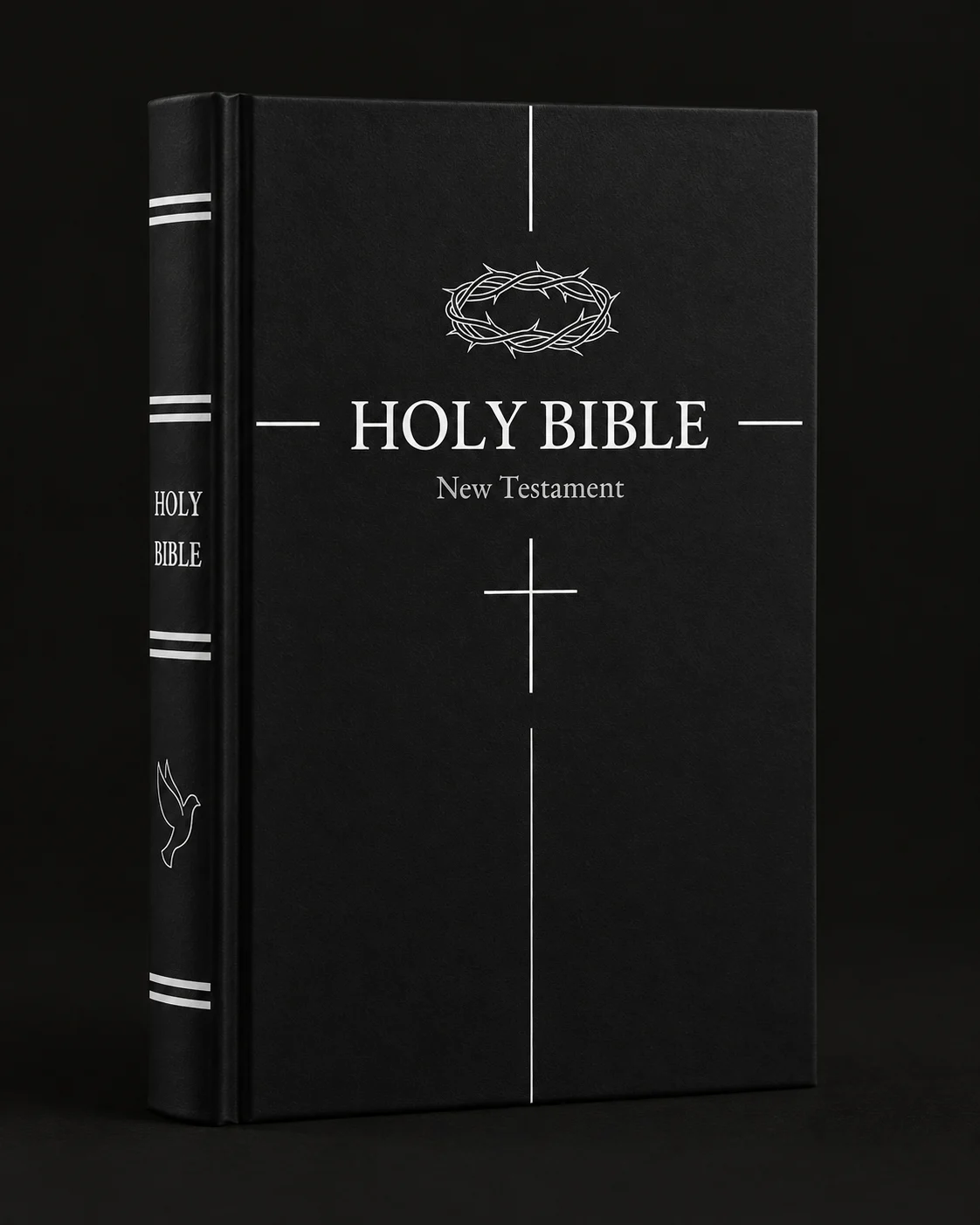
THE PRINTED NEW TESTAMENT
The Black Edition
White text on black pages. Jesus’ words in red.
All 27 New Testament books · English WEB.
Softcover $79 · Hardcover $99 USD · shipping separately
Buy the Black Edition Read a sample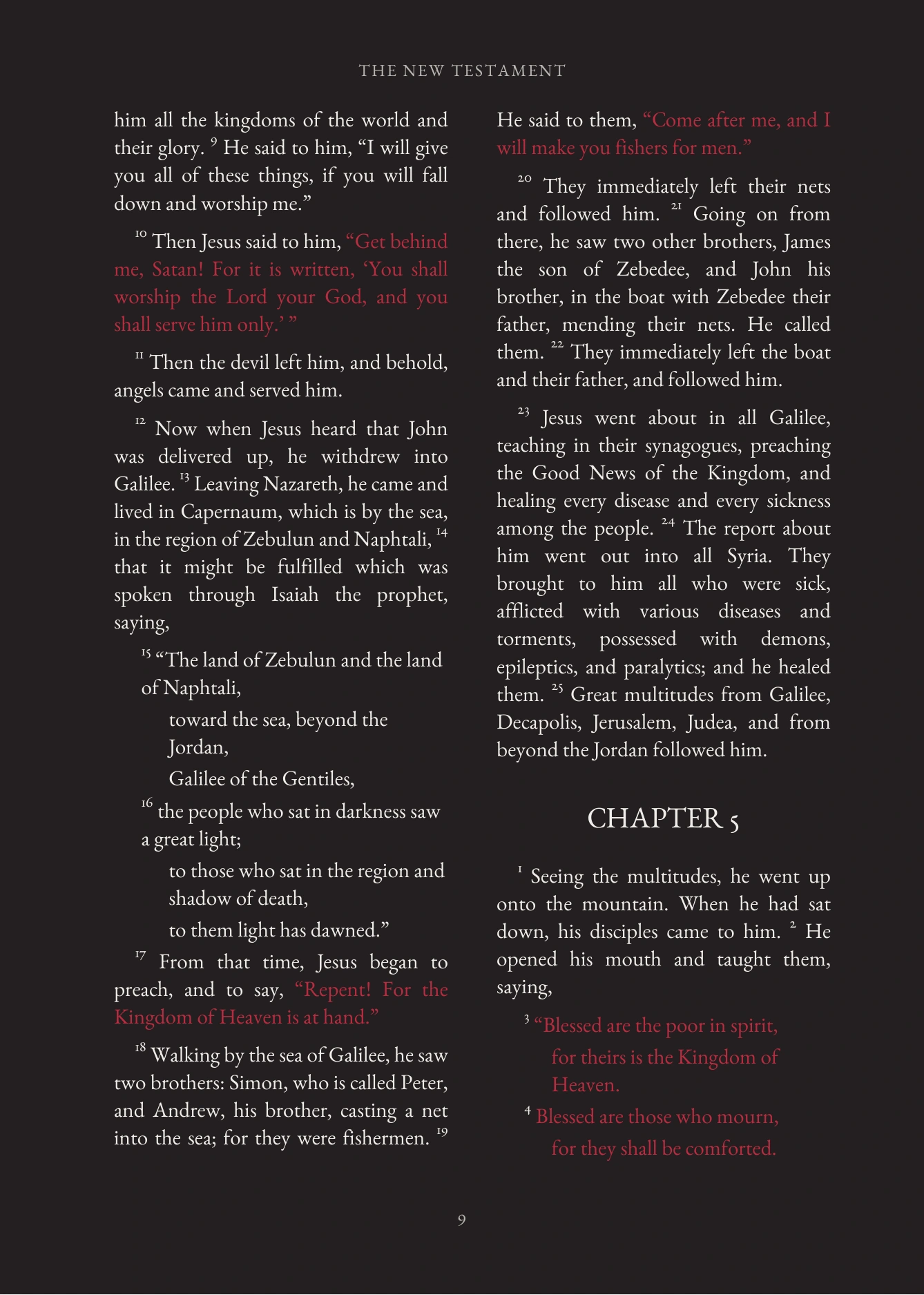
First, notice the beginning and ending
Matthew 5:1–2 describes Jesus going up the mountain, sitting down and teaching as his disciples come to him. At 7:28–29, the narrator describes the crowds’ reaction to his teaching. Mark those boundaries before choosing a smaller section to study.
On a first reading, keep a short list of questions without trying to resolve every one immediately. The aim is to see the sequence. On a second reading, return to one section and examine the surrounding paragraphs. This is an editorial reading suggestion, not a required schedule.
Matthew 5: blessings, witness and relationships
Read 5:3–12 for the Beatitudes, then continue into the images of salt and light in 5:13–16. Notice that the discourse continues beyond the list of blessings. In 5:17–20, Jesus speaks about the law and the prophets before addressing a series of familiar commands and responses.
For 5:21–48, divide your notes by the subjects the text addresses: anger and reconciliation, adultery, divorce, oaths, retaliation and love for enemies. Ask what action each paragraph calls for. Keep difficult lines in their paragraph rather than using a sentence by itself as a complete account of the teaching.
Matthew 6: prayer within a larger discussion
Read 6:1–18 together before focusing on the Lord’s Prayer in 6:9–13. The surrounding teaching discusses giving, praying and fasting, including the desire to be seen by others. Ask how that context affects the way you hear the prayer.
Then follow 6:19–34 through treasure, divided service and concerns about daily needs. Note the examples and contrasts Jesus uses. Record questions about the passage in your own words; you do not need to turn every observation into a personal lesson on the first reading.
Matthew 7: hearing and doing
Read the opening teaching about judgment alongside the image of the beam and speck in 7:1–5. Continue through asking, seeking and knocking, the instruction in 7:12, and the warnings that follow. Notice the repeated use of comparisons: gates, trees and fruit, then builders and foundations.
At 7:24–27, compare the two builders carefully. What do they both hear, what happens to both houses, and what differs? The ending directs attention to doing the teaching as well as hearing it. Finish with 7:28–29 so you also hear Matthew’s account of the audience’s response.
A three-sitting reading plan
For a manageable first pass, read chapter 5 in one sitting, chapter 6 in another and chapter 7 in a third. Before each new sitting, reread the last paragraph from the previous one. Keep one page of notes for the whole discourse so you can see recurring subjects rather than starting from nothing each day.
After the third sitting, choose one question to investigate. Write the verse reference, the question, and which part of the surrounding text might help answer it. A study resource or discussion partner may help, but begin by distinguishing what the passage says from what you are bringing to it.
Keep the book open while using this guide
This outline is a reading aid, not a replacement for Matthew 5–7. Use the full chapters linked below or a copy you already own. If you prefer a printed New Testament, the Black Edition includes Matthew in full; check its actual-page sample to see whether white text on black pages suits you. The book contains the New Testament only, not the Old Testament.
Prefer a printed copy? Read the sample before choosing.
Explore the Black Edition