The Lord’s Prayer appears in Matthew 6:9–13 and Luke 11:2–4. To read it in context, start with Matthew 6:5–15 and Luke 11:1–13. This guide uses World English Bible Classic; compare the wording in the edition you have open rather than assuming every translation prints an identical form.
Where Is the Lord’s Prayer? Read Matthew and Luke Together
Find the Lord’s Prayer in Matthew 6 and Luke 11, compare the surrounding teaching, and check which translation you are reading.
Go straight to the guide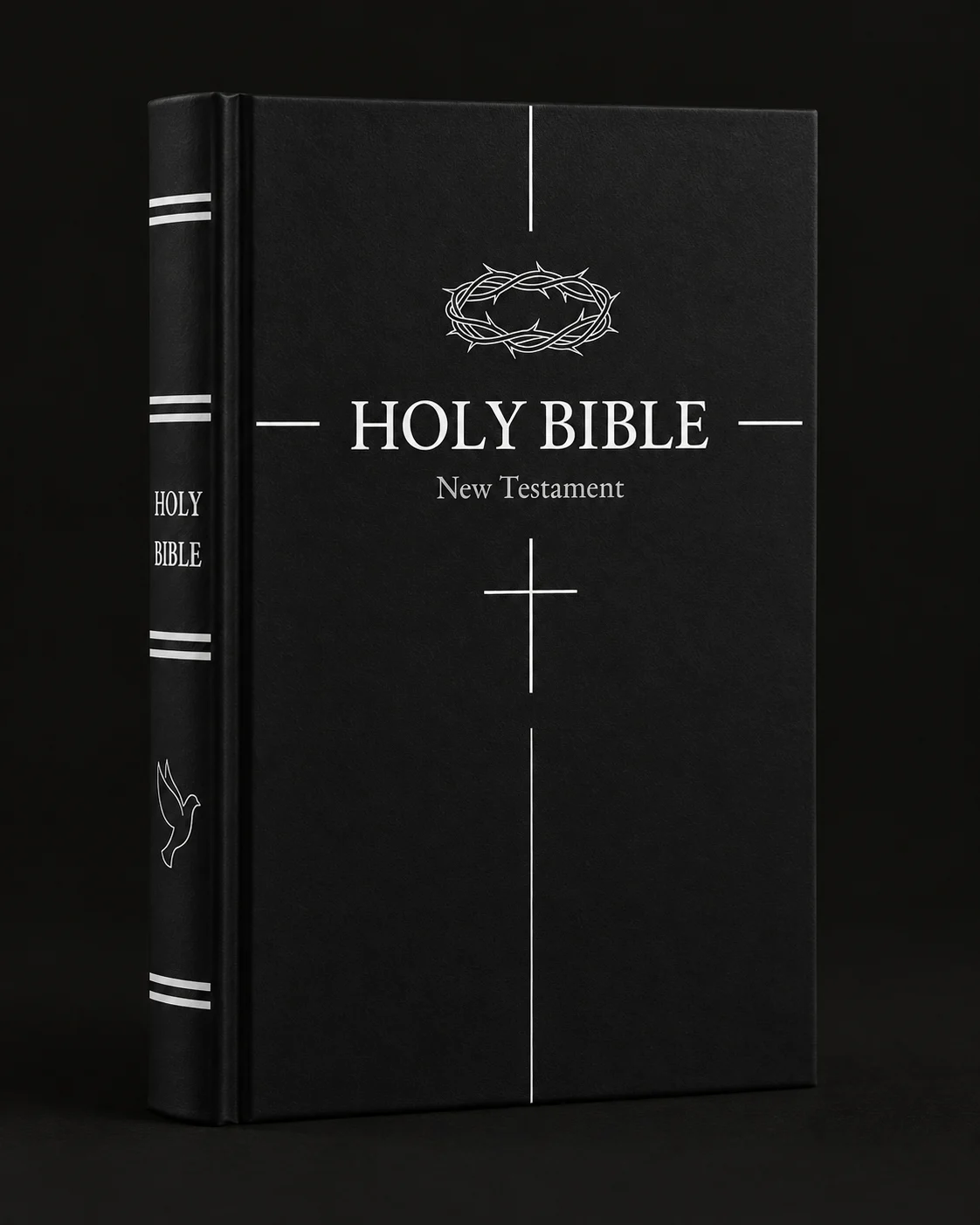
THE PRINTED NEW TESTAMENT
The Black Edition
White text on black pages. Jesus’ words in red.
All 27 New Testament books · English WEB.
Softcover $79 · Hardcover $99 USD · shipping separately
Buy the Black Edition Read a sample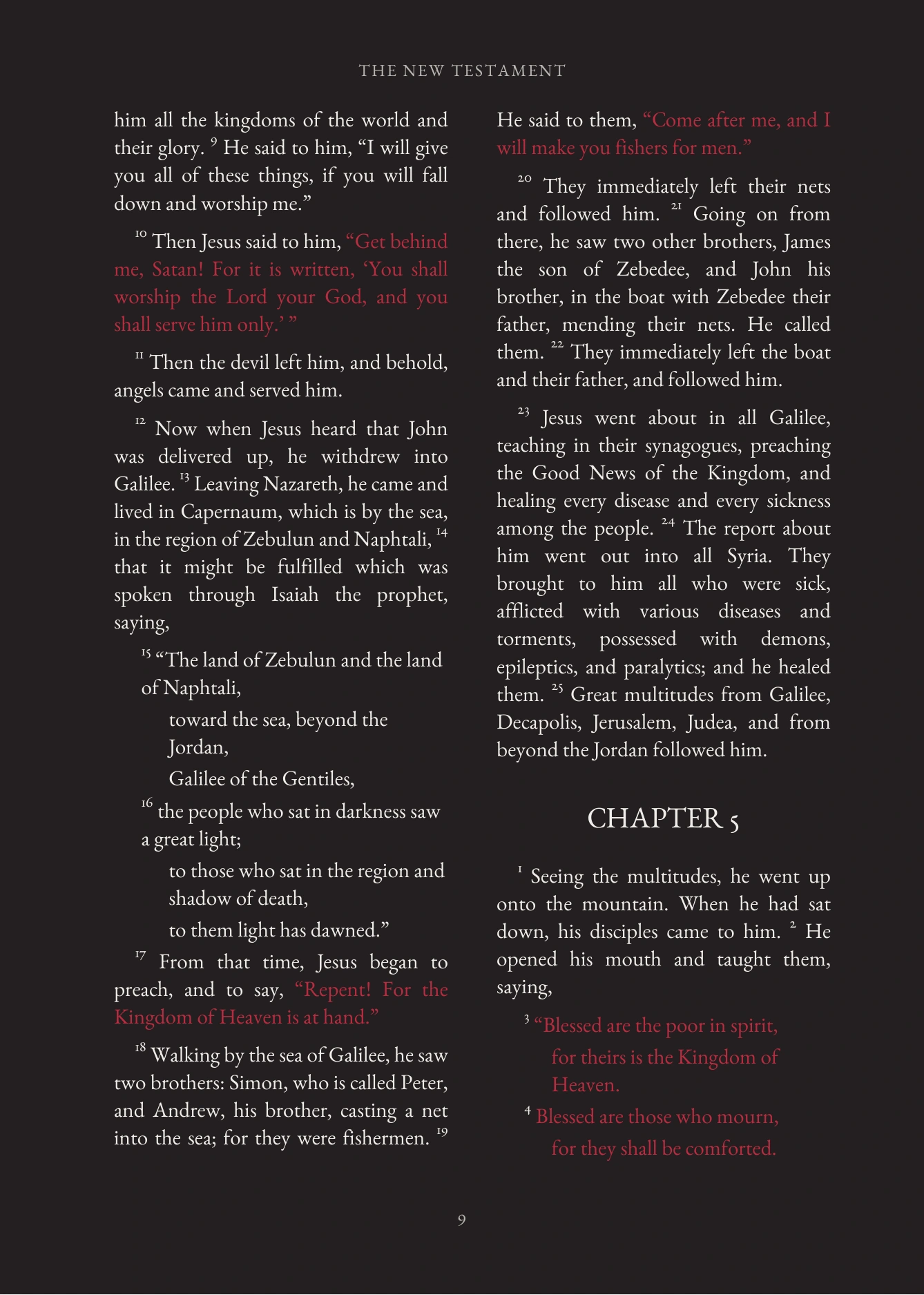
Matthew: read what comes before the prayer
In Matthew 6, Jesus discusses prayer before giving the prayer itself. Read 6:5–8 first and notice the contrast between praying to be seen by others and praying to the Father. Continue through 6:14–15, where the teaching turns explicitly to forgiveness.
For a first reading, use three headings in a notebook: before the prayer, the prayer, and after the prayer. Put one observation under each. This keeps the surrounding teaching visible when you return to a familiar line.
Luke: begin with the disciple’s request
Luke 11:1 introduces the prayer after Jesus has been praying and a disciple asks to be taught to pray. Continue beyond verse 4 into the story of a friend asking for bread at midnight, then read through 11:13. Notice how the requests and the examples that follow sit together.
A useful comparison question is not simply “Which prayer is longer?” Ask how each Gospel introduces the teaching and what follows it. That gives you something concrete to examine even if you already know a version of the prayer by heart.
What wording should you compare?
In the WEB Classic passages linked below, Matthew 6:11 asks for bread “today,” while Luke 11:3 uses “day by day.” Matthew 6:12 uses “debts” and “debtors”; Luke 11:4 begins with “sins” and then refers to people indebted to us. Read the complete sentences before deciding what to make of a single word.
The WEB Classic text of Luke includes phrases about the Father in heaven, God’s will being done, and deliverance from evil. Do not assume a description of a shorter Luke text will match this edition word for word. Name the translation whenever you compare wording, and consult any textual notes provided with the version you are using.
What about the closing words in Matthew?
WEB Classic prints a closing statement about the kingdom, power and glory at Matthew 6:13. Its linked footnote says that the NU text omits that clause. That is a reason to check the translation and its notes before treating a difference between printed versions as a missing page or a printing fault.
This guide does not try to settle questions about church practice or which form someone should use in worship. If you are preparing to read with a congregation, check the wording they use. For a personal comparison, keep the two complete passages in front of you and label each clearly.
Try this reading exercise
Read Matthew’s surrounding passage once without stopping. Then read Luke’s surrounding passage. On a second pass, mark the requests in each prayer and write down one similarity and one difference you can point to in the text.
Keep observations separate from interpretations. “These versions use different words here” is an observation. An explanation of why they differ needs additional support. If you cannot yet explain a detail, leave it as a question rather than filling the gap with a confident guess.
Read it in the book you already use
You can follow this comparison using the full passages linked below. If you are choosing a physical copy, our Black and White Editions contain both Matthew and Luke within the 27-book English WEB New Testament. They do not include the Old Testament. Open the actual-page sample before buying; the guides are free to read whether or not you order a book.
Prefer a printed copy? Read the sample before choosing.
Explore the Black Edition