Start with a whole scene, not an isolated sentence. Read the paragraphs around the verse, identify who is speaking and ask what question or event the passage responds to. Then separate what the text says from what you think it means for your own situation.
How to Read a Gospel Passage in Context
Follow the speaker, the question and the surrounding paragraphs before drawing a conclusion from a Bible verse.
Go straight to the guide
THE PRINTED NEW TESTAMENT
The Black Edition
White text on black pages. Jesus’ words in red.
All 27 New Testament books · English WEB.
Softcover $79 · Hardcover $99 USD · shipping separately
Buy the Black Edition Read a sample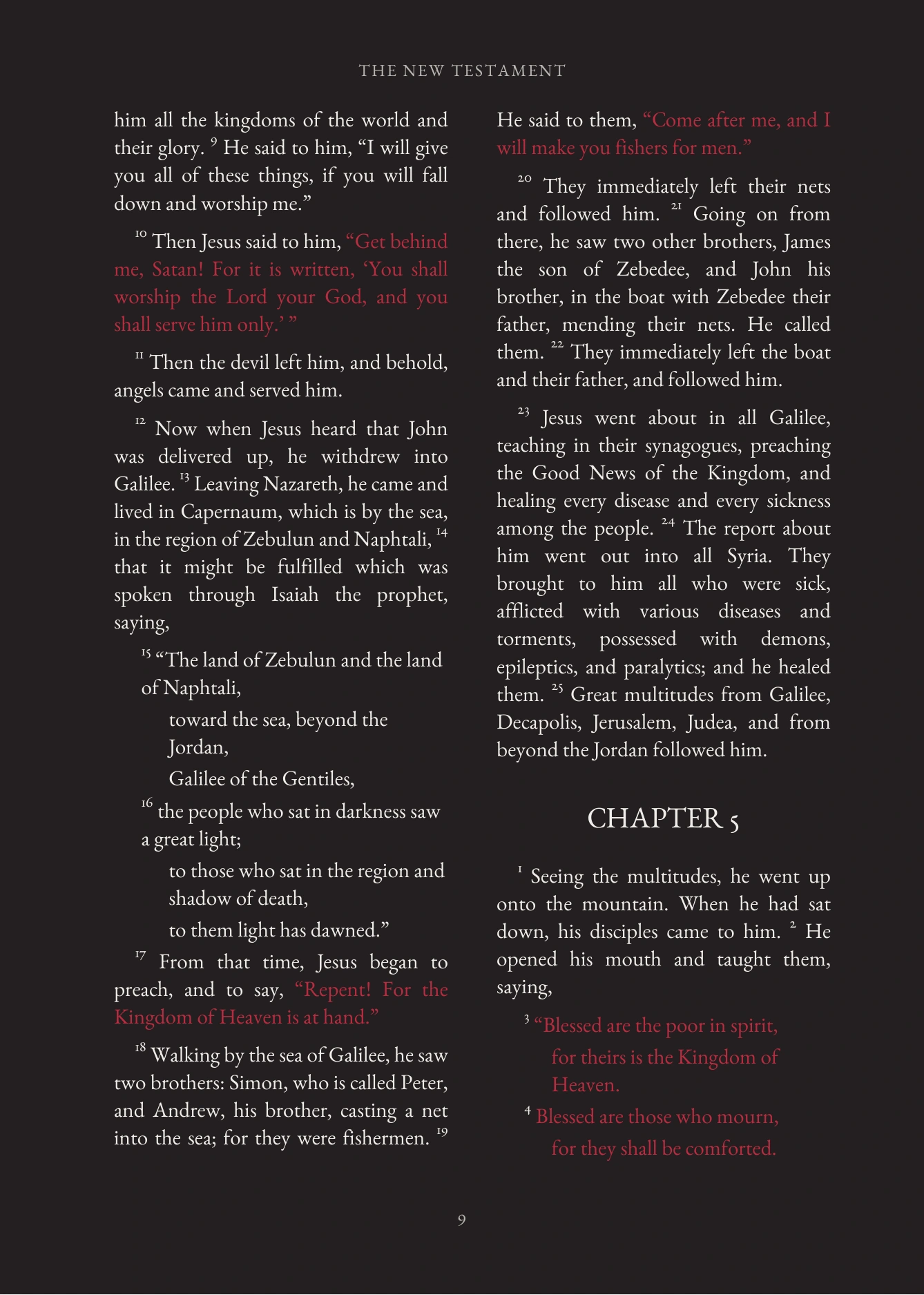
Find the beginning and end of the scene
A verse number helps you find a sentence. It does not tell you how much to read. Move backwards until you can identify the people and the situation. Continue until the conversation ends or the setting changes. If a pronoun is unclear, look for the person named earlier.
Write down the reference for the whole passage. You can still return to a favorite verse, but you now have a way to check whether your use of it fits the conversation.
Try it with the Good Samaritan
Read Luke 10:25–37. The story begins with a legal expert testing Jesus about eternal life. Their discussion turns to loving God and a neighbor, followed by a question about who counts as a neighbor. The Samaritan story answers within that exchange.
At the end, Jesus asks which person acted as a neighbor to the injured man. Notice the movement from identifying a neighbor to showing mercy. That connection is easier to see when you read the questions as well as the story. This is an observation about the passage, not a complete account of everything it might mean.
Keep observation and interpretation separate
Divide a sheet of paper into two columns. In the first, record something you can point to in the text: a question, an action, a repeated word or a change of speaker. In the second, record your explanation or a question you still have.
For example, you can observe that the Samaritan gives practical help. A discussion about what comparable help might look like today is an application. Both matter, but keeping them separate makes it easier to notice when an explanation goes beyond what the passage actually says.
Check your conclusion against the whole scene
Read your proposed summary aloud, then reread the passage. Does your summary account for the question at the beginning and the response at the end? Did you overlook a detail that complicates it? Revise the summary rather than forcing every sentence to support your first idea.
A second translation may help you notice different wording. It does not automatically settle an interpretive disagreement. If a historical detail becomes central to your explanation, look for a reliable reference instead of inventing a background story.
A small routine for next time
Choose one scene. Read it twice, note one observation, write one question and summarize the scene in a sentence. Leave room for an unanswered question. The aim is careful attention, not a perfect explanation on the first attempt. You can use a Bible you already own or the free passage linked below.
Prefer a printed copy? Read the sample before choosing.
Explore the Black Edition