Luke 15 contains three related stories. Read verses 1–2 before beginning the lost sheep: the chapter opens with people coming to listen and with a complaint about Jesus receiving sinners and eating with them. That setting frames what follows.
Luke 15: Read the Three Lost-and-Found Parables
Follow the lost sheep, lost coin and two sons while keeping the opening and ending in view.
Go straight to the guide
THE PRINTED NEW TESTAMENT
The White Edition
Black text on white pages. Jesus’ words in red.
All 27 New Testament books · English WEB.
Softcover $79 · Hardcover $99 USD · shipping separately
Buy the White Edition Read a sample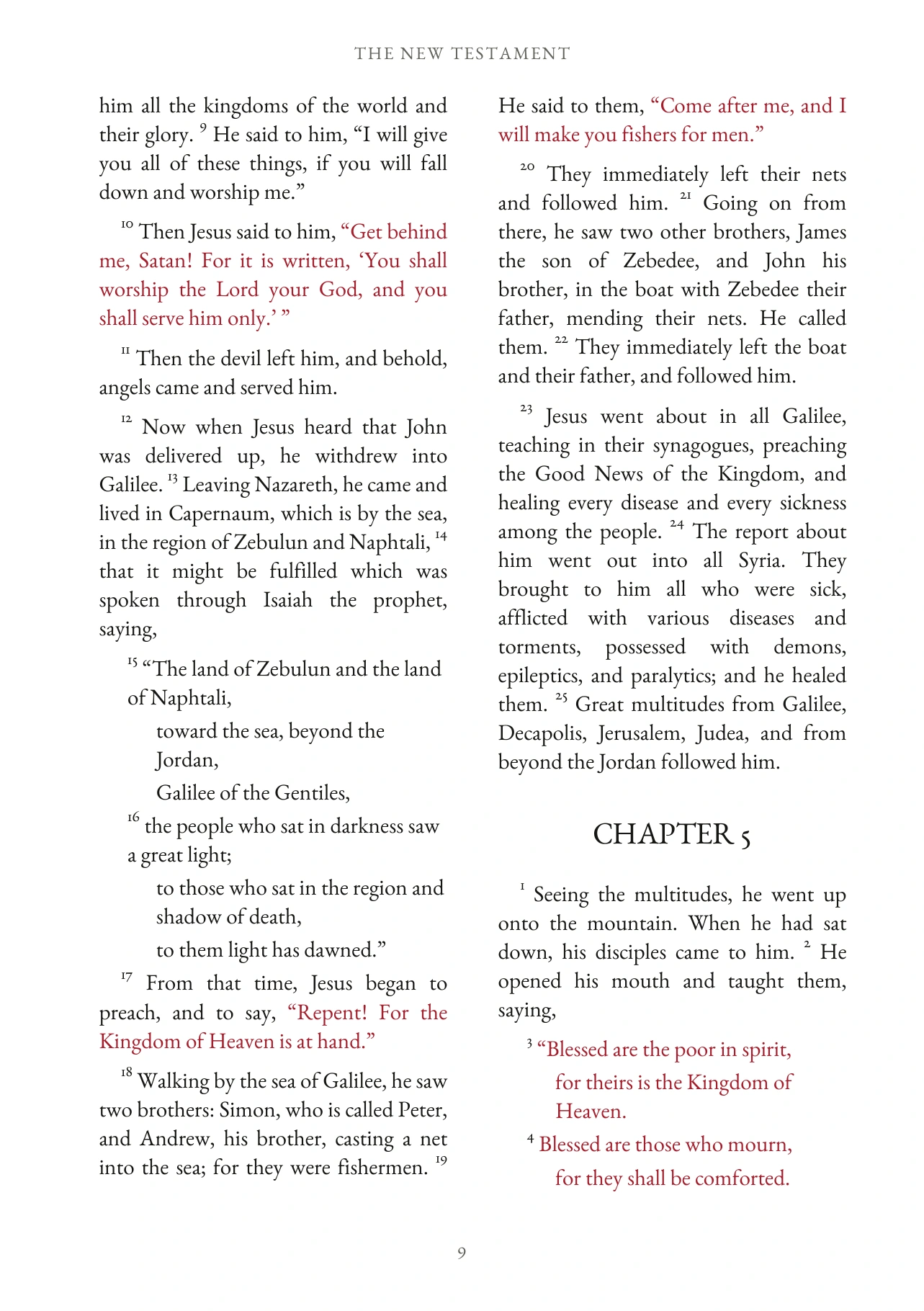
The sheep: verses 3–7
Notice the loss, the search, the finding and the invitation to rejoice. Separate the story’s events from the explanation that follows it. What does verse 7 add to the picture? Keep both parts together when discussing the passage.
The coin: verses 8–10
List the actions the woman takes. Compare the invitation to her friends and neighbors with the invitation in the previous story. What repeats, and what changes? The similarities make the third story easier to approach, but they do not mean every detail must stand for exactly the same thing.
The two sons: verses 11–32
Read the whole story, including the older brother’s response. Stopping when the younger son returns leaves out a substantial part of the account. Track what the younger son plans to say, what happens when he arrives, and what the father does.
Then turn to verses 25–32. What does the older brother hear, ask and refuse? What reasons does he give? Read the father’s final response carefully. The story ends there; it does not narrate the older brother’s next action.
Questions for discussion
Who rejoices in each story? Who is invited to join? How does the opening complaint help you read the ending? Use specific verses when explaining your answer.
These questions are meant to support reading, not to make someone disclose a painful family experience. A group can discuss the characters without assigning real people the roles of the two brothers.
For a second session, reread the chapter aloud in three sections. Let one person summarize the events and another check the summary against the words on the page. Note what was omitted before moving to interpretation.
Read the sample and choose the format that suits you.
Buy The White Edition