The Beatitudes appear at the beginning of the Sermon on the Mount. Start with Matthew 5:1–12, then continue through verses 13–16. Reading the opening as a sequence helps prevent a single line from becoming detached from the teaching around it.
Reading the Beatitudes in Matthew 5
Read Matthew 5:1–12 in context and follow each blessing and its accompanying promise.
Go straight to the guide
THE PRINTED NEW TESTAMENT
The Black Edition
White text on black pages. Jesus’ words in red.
All 27 New Testament books · English WEB.
Softcover $79 · Hardcover $99 USD · shipping separately
Buy the Black Edition Read a sample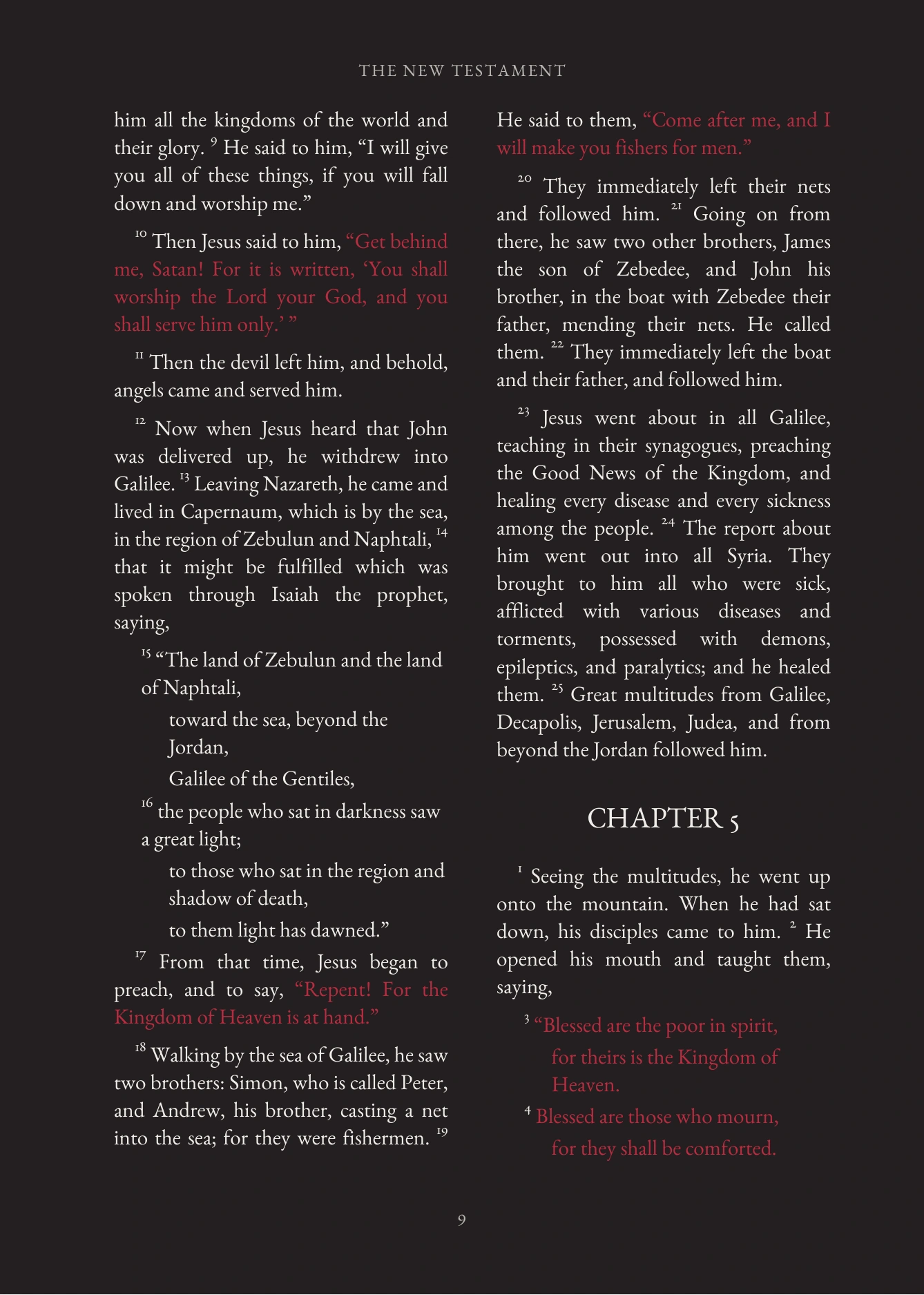
Notice the setting
Verses 1–2 describe Jesus going up the mountain, sitting down and teaching as his disciples come to him. The sayings that follow are spoken within that scene. Record who is teaching and who is present before making a list of themes.
Read both halves of each blessing
For each saying, identify the people described and the promise attached to them. For example, verse 4 speaks of those who mourn and of comfort. Do not replace the particular description with a vague instruction to feel positive.
Read the sayings about mercy, purity of heart and peacemaking together. What does each sentence actually promise? Which promises use similar language, and which differ? Make a short table on paper if that helps you compare them.
Watch the change in address
In verses 11–12, the wording directly addresses “you.” Read these verses alongside the preceding saying about persecution. Distinguish suffering described in this passage from a claim that any disagreement automatically makes a person righteous.
The following salt and light sayings continue the teaching. Reading verses 13–16 after the Beatitudes can prompt questions about how the descriptions relate to visible conduct, without treating the opening as an isolated checklist.
Discuss without forcing an answer
Choose one saying and ask what is clear from the words, what is difficult, and what further context you need. In a group, allow people to describe the text before asking for personal examples, especially when discussing mourning or persecution.
The sample pages for our printed New Testaments show how Jesus’ words are marked in red. Red lettering is an editorial reading aid; the surrounding narrative and the rest of the passage remain part of the reading.
Read the sample and choose the format that suits you.
Buy The Black Edition